Issue 6: Oceans
The waves whisper stories to those brave enough to listen.
Dear Reader,
When I was a little kid, I would stand with my back to the ocean and listen to the waves crashing over the rocks, imagining all the horrible things that might be in the water. Eventually I would get too scared and turn around just to make sure I was really alone. I would run along the beach at night, feeling a sense of absolute freedom and absolute terror. I would read about the ghosts that haunted the highways and the spirits in the lighthouses, and wonder how many specters had crossed my path without my knowledge.
Last month I went back to Cannon Beach, Oregon for the first time in years. I had never been there in December before. Maybe it was the rain and the gray skies, but even though the town was decked out in Christmas lights and blasting festive music, I couldn’t help but notice the lovely undercurrent of melancholy. Like so many other places in my life, it’s beginning to feel haunted.
Lo Corliss
Table of Contents
Betty’s Smile
Poetry
By Jenny Dunbar
Ferntown Bridge
Short Story
By Hillary McDonald
Perpetua Black Tide
Flash Fiction
By Sai Marie Johnson
Final Voyage
Short Story
By David O’Mahony
Siresolus
Flash Fiction
By Bailey Bridgewater
News

Betty’s Smile
By Jenny Dunbar
The bass note holds me like a charm, opening a conduit between dark and light. The water brings many things home, the polished and split, the indiscriminately out landed. Shell within a shell, breathing sea salt ballads in my ear. All tides turn. Rip. The water gives up its hulks, and its shoals fly, light of foot, among the caves, dancing to the tune of the stars. With a knowing eye, one can follow the trail of light.

the windswept walk towards the border trains,

I pause, watching chaos simmer, there will be time enough,

a child walks by, clutching a picture of a black moon,

a place of safety?

there is no such place,

transitioning along one road to another had become a routine task,

travelling a distraction,

arriving?

a more anxious anticipation than it used to be,

there is a room the colour of Irish navy, whose interior is entirely made of soft fabric, inside which one might curl, unnoticed, and undisturbed,

its blue curtain, marked with burnt umber, draped,

landscapes of citrus days in summer sit against a backdrop where light falls, and is caught,

reminiscent of another time one cannot quite place, exhilaration in knowing it might be found,

landscapes where liquorice thyme bloomed on the salt wind, irises stood tall towards the hills,

on sun drenched terrasses long suffering succulents spread pale purple, gazing out,

these familiars, remembered, as if through glass,

time becomes a dull ache, tedious in its repeat,

the sullen hour shuts, as water closes,

after that I could not remember the seasons, casualties perished in the cold and the only light was neutral,

who had made the sky turn?

winter had been the worst, the land barren,

worn tracks between fallen trees, branches, brittle as a bird’s bone, the world flickering, its population, limp nomads,

implicit new language, guttural, indirect,

a broken boat drifts towards the shore, in the dawn mist

where open ground silvers on the opposite horizon,


if I could reach you, we might share coffee and a biscuit, maybe warm bread in silent companionship, share aloneness, make considered observations on the drab and extraordinary, laugh because of nothing,

the safe harbour of nothing, untrammelled by requirement to justify,

where now?

Once, lifetimes since, our small feet touched warm sand, toes curled and gripped the glinting

grains, our hands gathered and flung,

we stood laughing as the particles dispersed and scattered, repeated the action, falling with them,

there was a hole in the fence where we used to chat through warm wood, eye to eye, summer mornings, last end of Sundays,

we gazed at the holes in the moon, mottled in monochrome, and travelled their canyons,

encountered the suddenness of another day,

dug small holes in mulched flower beds, where we discovered congealed breadcrumbs which you said were mouse stomachs, then quickly covered them up,

it is summer, I wear blue jeans and a red striped T shirt,

feet in plimsoles, marching time on concrete, arms full of sun,

impatience not yet quelled,

the ball bounces back off the yellow brick,

time has holes, holes in between the acts, some covered with the lichen of denial, others still to be confronted,

I will not reach you in the same way again, glasses will not be raised, neither strong coffee sipped nor savoured, the garden fence is a faded memory, the mice, a figment,

thank you for laying out the manner of farewell, your dry sense of humour has always been an asset,

your smile makes me smile,

detachment need not mean there is lack of empathy nor dearth of sentiment, what another might construe as cold, I understand to be otherwise,

but I shall miss our connection, still holding my end of the string, tying it all up,

idiosyncrasies of time and place, the haphazard and routine.

days of winter sun, grey streaks on the cusp of rain, realigning into light,


man in the distance, the spring collector of tithes,

green eyed and strangely silent, picking and pocketing.

I turn, observe the manner of his gait and purpose, retract my gaze, the notes of circumstance halting me in the tracks,

you are well, out,

In my mind’s eye, the narratives of past and present slip apart as we spin into out there,

where all reference points are cut

we all fall,

even all of us,

if I could reach you, the anecdotes time left,

the days


At the shoreline, where water frills in broken edges, I turn my back against the wind, bury a

crystal charm in the thirsty grains, cast a dream.

your smile, always in a mind’s eye.
An Interview with Jenny Dunbar
Why did you write this piece? The piece was inspired by loss and memory. So many images flash by in these weird times, which move one to put something down. I find I become more reflective as time passes. Time is a theme I tend to return to. The characters do emerge as haunting companions, some close, others at a distance.
Do you have a favorite place to write? I sit in a pleasant corner in the sitting room.
What are your favorite and least favorite parts of writing? I am quite a disciplined individual and I like the rigour of discovering the right quality of the words. I never stop editing, there is always something to alter, that is a good thing.
Jenny’s Links
Ferntown Bridge
By Hillary McDonald
My headlights catch the girl just as she steps off the Ferntown bridge. A pale face and dark hair, thin arms stretched out, fingers splayed. I brake hard. Rushing to the railing, I shine my phone down into the water. It is flowing fast, a smooth black surface. No ripples, no body, no trace of the girl.
My eyes search the water, hands clutching the metal railing.
“What happened?” A rough voice at my shoulder.
I start and spin around. An old man stands in front of me, arms reaching out to steady me. An old truck sits idling next to my car.
“A girl. Just a little girl, long black hair. She jumped.”
He pulls back, dropping his hands. His wrinkles deepen as he frowns.
“Now that seems a bit unlikely; no girls like that round here. Mind can play tricks ya know. Have you just driven from the city? Must be awful tired.”
I stare at him, and he drops his eyes, one hand scratching hard at his bearded chin.
“Probably time for you to head on home.” He pats my arm and steers me towards my car.
“I’ll pop round in the morning to check on you. You’re in the old McCashin place on the beach side, right? I have the dairy farm down the road, right before the big hill. Always good to know your neighbours out here, eh.”
When I finally sleep that night, my dreams drag me down and keep me deep. They are filled with dark water and grasping pale hands.
The sun is hot across my face when I wake, and a sharp rapping fills the house. As I open the front door, a hand thrusts a basket towards me.
“Realise I didn’t actually introduce myself last night. It’s Ian, Ian Johnson. Some scones in there for you. I’m famous for them round here, you know.”
Nodding, I try to smile. My mouth feels sticky and numb.
“Victoria, Vicky. Vicky McCashin.”
Ian blinks, and the basket in his hand wobbles. “Related to Angus?”
“Yeah, my grandfather.”
“Best of luck to you then.” He places the basket down carefully before striding back to his truck, his broad back hunched.
In the kitchen, I unwrap the scones and eat three standing at the bench. Out the big window, I can see the wind is building on the sea, cresting little wavelets with white.
It is a week before my sleep is dreamless. I have avoided Ferntown and its bridge. Eating through the reserves in my pantry, tins of tuna and crackers for most of my meals. I try to paint, but my brush is only drawn to dark colours, and the silhouette of the girl appears in all my sketches. I walk the beach, morning and afternoon, ignoring the calls from my father and the increasingly frantic texts from my Auckland friends. They had despaired when I moved to the old family house, so rural that mail is only delivered once a week. But my advertising job had seemed frivolous after my mother’s death, and I couldn’t stand being so close to my father’s frozen grief. The inheritance allowed me freedom, and I used my budding painting career as a crutch to explain my escape from the city. “Everyone knows the light by the ocean is the best. I’ll have a real chance to focus on my craft,” I told everyone. And they smiled and told me how brave I was.
“So you’re related to Angus, are you?” The woman at the checkout squints across the counter at me. Her face is still, the bland, friendly smile she used to give me gone.
I nod.
She reaches under the counter and passes me a packet. “Plant these around the property, might help a bit.”
I hold the packet with my fingertips.
“Sage,” she says.
Smiling weakly, still confused, I shove them in my pocket.
As she hands me my receipt, she pauses. “Must have given old Ian a real fright finding out about you. You even look like her a bit, round the eyes at least.” She shakes her head and then turns to another customer, leaving me to gather my things.
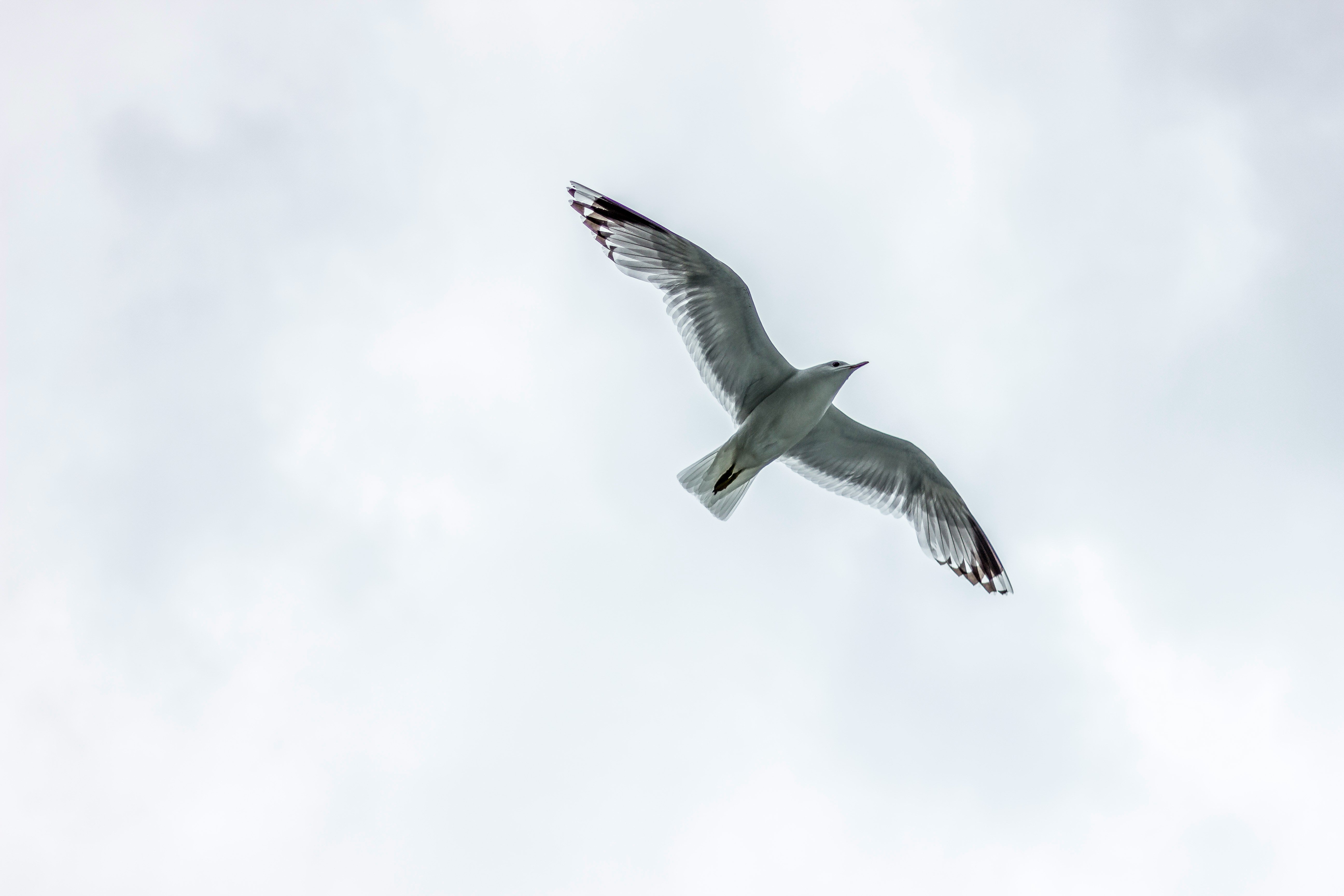
I check the battered, metal letter box at the start of my drive, hoping for an early birthday card from my father. When I reach inside, my fingers find soft feathers and a sharp beak. I recoil, and the letter box slams shut. Reaching out again, I open the box. Lying inside is a seagull wreathed in white daisies. Its head rests on its chest, the neck broken. Getting out of the car, I gently lift the bird free, stroking the sleek wings with my finger. I push my way through the dense bushes by the drive, cradling the bird to my chest. I lay it down underneath a holly bush. It lies in the dirt, wings slightly outstretched, the garland of flowers caught in its claws. Back at the house, I hold my hands under the hot tap until they are blotched red and my skin burns. Later, I paint, and a gull skates across a bright sky, white wings wide.
I begin to find wet footprints in my hallway. Small prints, no longer than my hand, shine against the brown wood. Ten delicate circles of water for the toes, space for a high arch, and then a perfect crest of a heel. They appear at random times. Sometimes in the evening, after I’ve been out walking on the beach. Sometimes they are there when I leave my room in the morning. They always lead down the hallway and out the front door.
I find Ian sitting on my porch one morning when I return from a windy beach walk. He stands awkwardly as I approach, shuffling his feet. He is holding something in his hands and rubbing it with his thumbs.
“Wanted to apologise, see,” he blurts out.
Nodding, I push my hair back and straighten my shirt.
“Just finding out you are related to Angus and all. And then you look a bit like her, you know, your great aunt.”
I frown, “I don’t have a great aunt. Angus was an only child. That’s what mum always said.”
Ian pales. “Right, ok then. Well, here. I brought you this.” He shoves something metal into my hands. “Used to have one hanging there above the door. Keeps in the good, keeps out the bad. You know, bad spirits.” He strides away, shaking his head. His truck throws gravel in the air as it speeds off.
I look down at his gift, an old horseshoe. Running my finger over the rough metal, I stare up at the door. Then I throw the horseshoe in the bushes and head inside to paint.
That night, the wind is wild, banging against the house, sending drafts down the hallway, making doors slam and creak. The glass in the windows rattles, and cold air swirls around my room, scattering my sketches. It finally quietens at midnight, and I’m able to sleep. In the morning, the hall is littered with wet footprints. They seem frantic, running up and down, stopping at the doorway of each room.
I celebrate my thirty-first alone with a cheap bottle of champagne. Toasting myself and the growing collection of paintings in the corner of the dining room that serves as my studio. An art dealer is coming down from Auckland. He feels my work could really be a hit this season. “Moody nature scenes are so popular right now,” he gushes over the phone. Bottle in hand, I dance the hallway, spinning and leaping. Shaking my head free of my mother’s dying face and her black hair reaching across the pillow.
A few weeks later, I drop the art dealer off at his hotel in Ferntown. Seven of my pictures are going to travel with him back to Auckland, and he has left a sizable check behind with me. The sky is darkening as I drive home, and the first stars are emerging above the shadowed hills. As I reach the Ferntown Bridge, I hold my breath and unconsciously slow the car. There she is, balancing on the metal railing. Bare feet, toes curled. Her blue dress just covers her knees. She turns to look at me, and just before she jumps, she smiles. Her teeth are small and sharp.
I drive straight to Ian’s farm. His door is open, and I find him in the kitchen, hands covered in flour. He starts when he sees me, then sighs.
“The girl again.”
I sit at the kitchen table and cross my arms over my chest.
“Tell me,” I reply.
He washes his hands, drying them slowly with a flowered tea towel. From the cupboard, he gets an unopened bottle of whiskey and two glasses. He pours himself one and leaves the bottle open, an empty glass in front of me. I ignore them.
Ian sips his whiskey, wincing. “Your great aunt was named Lydia, and we were in love. She was only eighteen, but she knew I was the one.” He pauses, grimaces. “Angus was jealous, unnatural like. Wanted Lydia all for himself. And when he found out there could be a child, well. Nothing much anyone could do.”
As Ian drinks the bottle, he tells of Angus’s rage, the Christchurch mental hospital and forced adoption. Lydia’s suicide.
“I tried to find the baby, God knows,” Ian slurs, tears dripping on the table.
“So where is she?” I insist. I am tired of his useless grief.
“I don’t know. The family that adopted her wouldn’t talk to me. They only lived in the next town, but they never brought her to visit.”
Ian drops his eyes to the table, his fingers trace patterns in his tears.
“I think she tried to come back here to me, to know about her mother, know her birth family. But Angus found out and . . . “
I close my eyes, see the Ferntown Bridge, a young girl running to escape a hateful man.
Pushing away from the table, I leave him and head home. Home to Angus’s fortress, Lydia’s prison, my escape.
That night, I dream of my mother. She walks the beach, wind wild in her loose dark hair. A few yards behind her, a young girl skips, mirroring her footsteps. A gull screams, they both turn, and their eyes find me.
In the morning, there is only one pair of footprints. They stand outside my door. I dip my finger in the water and put it in my mouth. The water is fresh, cool on my tongue.
I spend all day painting. Vast landscapes of sky and dunes. Wind bending the dune grass into graceful submission. It is growing dark when I finish my last painting. A woman and a young girl, hand in hand, walking together into crashing surf.
She finds me in my studio, the room now black around me. When she reaches out to me, I put my hand in her small, cold one. She turns it over, palm up and stares at me with bleak eyes. Her pale lips pull back into a smile, and I barely flinch as she sinks her sharp teeth into my hand.
An Interview with Hillary McDonald
Why did you write this piece? We have a small bach in Pakawau, which is in the far northern tip of the South Island. To get to the bach, we have to cross five one-lane bridges. The longest is the Ferntown Bridge. It is a very steep bridge, and you can't always see if a car is coming from the other side. When the tide is in, the water below the bridge can get very high. Sometimes in the summer, local kids like to come down and jump off the bridge. In the spring, whitebaiters come down to fish for whitebait. The bridge has a strong presence in the community, and I have always wanted to write a story that connects to it. This is the story that emerged.
What are your hobbies? Do they ever play into your writing? I'm an outdoor education teacher, and I'm lucky that my hobbies are also my work. I spend most of my time outside, in the bush, on the rivers or the ocean. I don't think my writing particularly connects to my other interests. If anything, writing is a chance for me to express my alter ego.
Tell us a few facts about yourself! I live in the South Island of New Zealand in a small village called Wakefield. We have what's called a lifestyle block, two alpacas, some sheep, very beloved chickens, two dogs and a horse. My family and I love spending time outdoors.
Perpetua Black Tide
By Sai Marie Johnson
It was eerie, and yet Mireya’s mind couldn’t shake it – the caption for the travel blog had already been half-written in her head,
“Thor’s Well: Oregon’s Most Misleadingly Named Natural Landmark – Nothing Divine, Just Terrifying Geology.”
It was just the sort of title she thrived on; loved even. Anything with the raw, cold, wet truth of the place. She had driven intently for three hours south from Florence, desperate for a shot that fully captured the violence without resorting to cliché. The basalt shelf at Cape Perpetua was slick with spray, a permanent sheen of winter even on this clear November afternoon. She set her tripod close to the edge, ignoring the distant ropes. Her only goal was to get close, and prove the danger was merely physics.
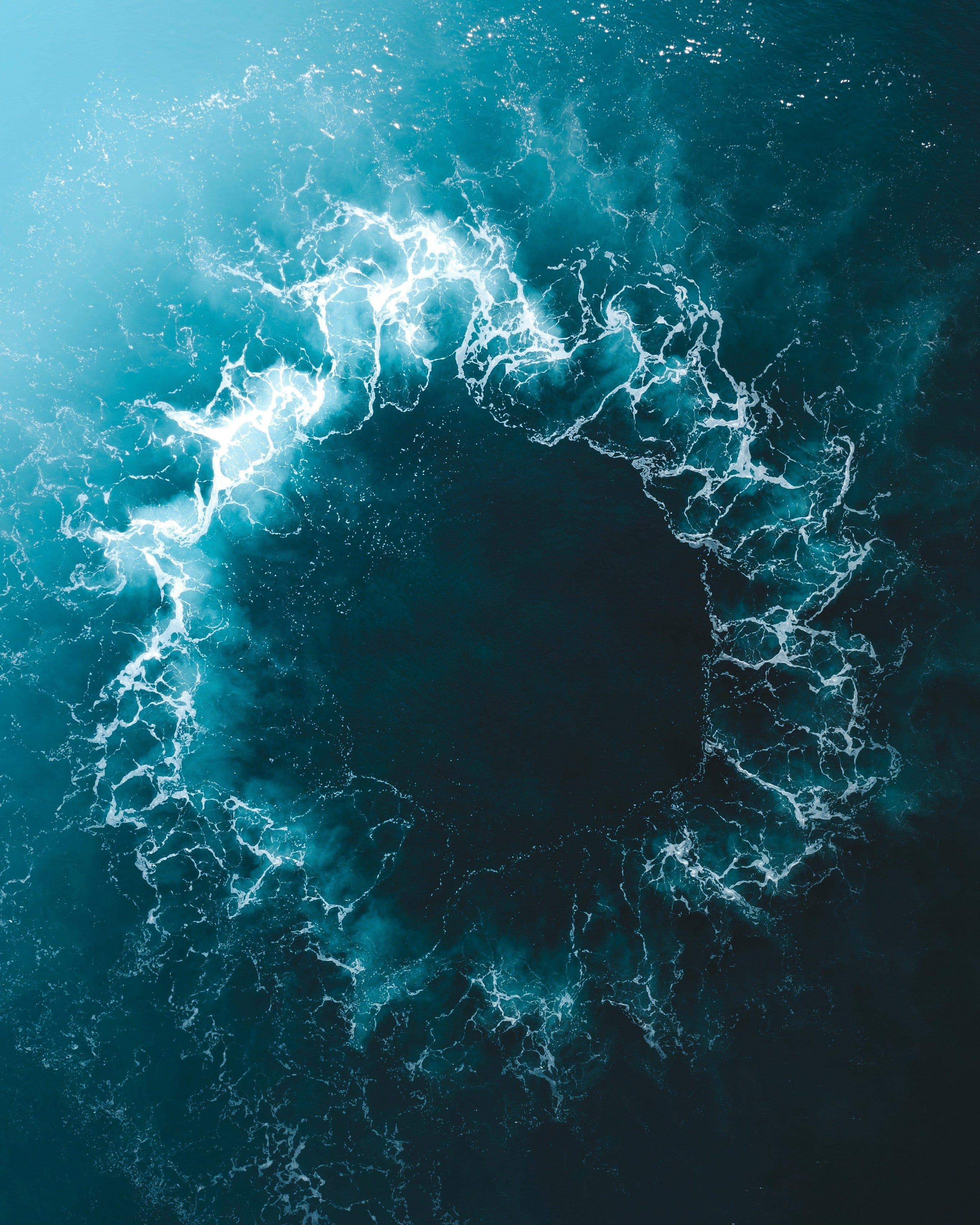
The Well inhaled, and then – the world paused. A deep quiet, and the vast circular drainpipe, began pulling the foamy brine into a churning dark void. The sound, then, was a mournful deep sucking, like a profound melancholy that brought her strange vibration to Mireya’s chest.
Click.
Oh, for the money shot – she captured the retreating water, next came the spout.
But, as the drain bottomed out, Mireya froze. The Skeptic’s Iron Rule played through her mind then – believe the lens, not the eye, snapped. Standing there on the wet, slippery base of the hole, draped in strands of red algae and black bull kelp, was a horse.
Impossibly thin, its dark frame too delicate for the crushing weight of the water it defied. It was completely still, head lowered, as though enduring some unending penance. Its eyes were two pieces of reflective, chipped quartz.
A glitch in the light. A trick of the foam.
She quickly adjusted her focus, trying to prove the shape was driftwood.
It wasn’t. It was equine. It was suffering.
It lifted its head. No sound came from its mouth, but Mireya felt a deep, sickening wave of grief wash over her, a desperate need to leap down, to touch it, and to pull it out of its watery prison. She understood, in a cold, electric flash of certainty, that the horse was the source of the Well’s mournful sound.
It wasn’t geology, it was sorrow.
She reached her hand out toward the Well—not for a picture, but to offer comfort.
Then somehow, the name of the creature, however impossible, came into her mind –
The Kelpie—didn’t move.
But as the next thunderous wave crashed against the shelf, it turned its quartz eyes directly onto her.
The Well exploded. It was not just water; it was a column of cold, saline energy mixed with the beast’s black, kelp-strewn form.
The force was sudden and absolute. It didn’t push her back; it pulled her forward, over the slick edge.
Her last thought, as the dark water swallowed her camera and her skepticism, was the new, terrifying caption:
It wasn’t physics. It was hungry.
An Interview with Sai Marie Johnson
Have you ever experienced anything paranormal? Yes, several times and my first memory of one was at Heceta Head Lighthouse in the 90s. I saw Rue in broad daylight at the age of nine there.
Do you have a favorite place to write? At home, with my laptop in my bed with my cat at my feet and wrapped in my blanket. That is honestly my ideal space for writing and creating.
Tell us a few facts about yourself! I'm 90% deaf, and yet I am also bilingual and apart from being an author/writer I am also a business owner and podcaster. I am the creative lead on three different podcasts that each showcase things I am passionate about: Histories of Horror (true crime, supernatural and paranormal), Around the Table with the AOTR (Advocacy and intersectional issues), and Mind of Sai Marie where I discuss various topics with other influential authors, public figures, and influencers.
Sai Marie’s Links
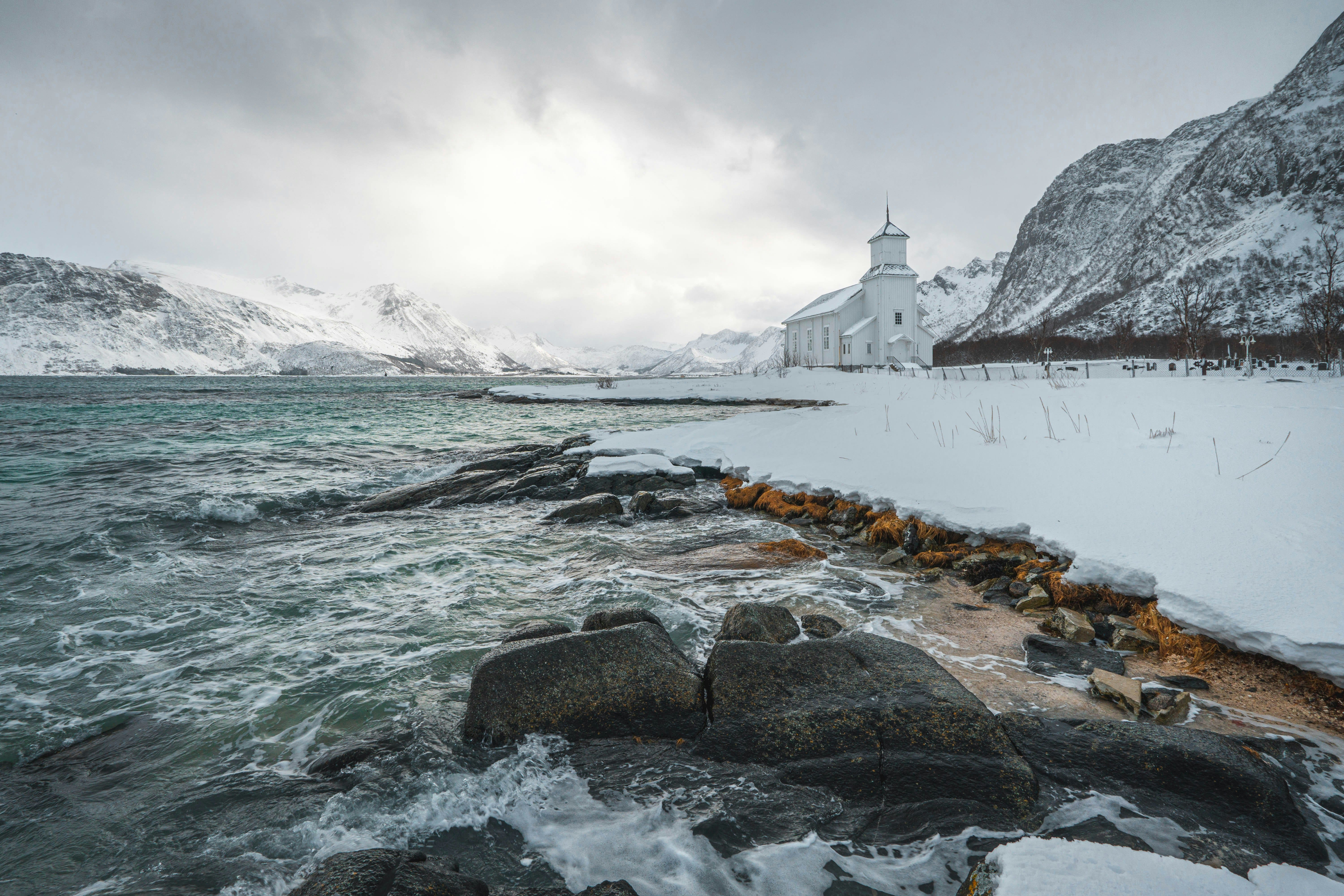
Final Voyage
By David O’Mahony
I’ve never liked graveyards.
People say they’re peaceful or restful, a place for reflection maybe.
They make the skin on the back of my neck crawl, my stomach knot, my teeth press together so hard I expect them to snap.
So many lives still full of promise snuffed out, all of them buried next to black hearts that never got the punishments they deserved, and in between them all those few, those happy few who actually want to be there.
Better surely to throw yourself into the waves and set yourself free. At least then you can pretend you’re going to be part of something bigger, like you’re taking one last endless journey around the Earth.
The land is lumpen and angled, and a whole section is blocked off with heavy red plastic barricades and tape where mounds must have broken apart in a storm, sending dirt and shattered tombstones sliding toward the main gate. A lightning strike, perhaps; there’s a stink of burnt earth that makes me shiver. The whole air feels disturbed.
A crude ruin protrudes out of a copse to my left, well behind the barricades. Saint Brendan’s church, though it hasn’t seen anybody but ghosts and genealogists for centuries. The name suits it: Ireland’s navigator, now keeping watch over a graveyard looking out onto Cork Harbour. Around the church cluster stone plaques and ornate marble sculptures that look gaudy and at war with the simple stonework of the church. Some have slipped in the mudslide; the tip of a femur forces its way into the air for the first time in three hundred years. How many of the stones beneath me were part of that church once, were part of something greater than themselves?
I ask them but they refuse to speak, or else their whispers are drowned out by the steady flow of water that gurgles back toward the car park.
Stepping cautiously, my feet giving way in the mud with little effort, I go around the puddles and running stream, even if it means going in the rough.
I’ve been going in a grid, or something like one. The headstones are in rows, but some of the older ones, the ones beginning to lean forward or sideways from years of the soil trying to escape around them, are laid out according to some pattern I can’t understand. Are there other graves there, now forgotten? Graves that never even got a headstone, or perhaps just a wooden cross with a name stamped on a brass plaque, now long rotten away?
The wind rises, and I think I catch fragments of words, only for them to pass.
A vaulted tomb built of limestone and reminding me of a thatched cottage though more basic, more primitive, is mostly covered with grass and dirt. But as I lay my hand on the entrance – long sealed with concrete, without even a keyhole remaining – something stirs within. A shuffle, a sigh, a quiet moan two hundred years in the making. At the base of the door, half buried in the ground, is a glass dome, now mostly green and filthy on the inside. But within, shrouded, are dried yellow flowers scattered among small, prickly green and grey leaves: marigolds and juniper, they tell me. An offering or a barrier? I ask but they don’t answer.
Ashes to ashes, dust to dust, and all that. A tumbled angel lies in pieces; I step over it, and for a second the stone stirs beneath me with some vague memory of its calling to watch over the dead, only to fall silent again, as immovable as the grave it has failed to protect. Worms and insects tunnel beneath me, the earth yielding gently.
It’s a grey day, the sun hanging behind the clouds and the crash of waves rolling up the hill from Cork Harbour to fill my ears. There’s a plot near the crumbling dry stone wall on the far side of the graveyard just for men and women who drowned at sea. It’s fenced in with decrepit iron bars; their duty to the dead done, the locals have left them to rot in peace rather than try to reunite their remains with loved ones in Dublin, London, Liverpool, Mumbai.
Rain spatters my face and the collar of my shirt, a pale mauve beneath a stiff suit jacket that somebody being kind would say looked better on the model. With matching trousers and hard-soled leather shoes I edge around as tenderly as I can, trying to be respectful even as I have no choice but to stand right on top of final resting places while I search.
I’m looking for a particular grave, a family grave that I know I’ve seen before even though I can’t remember where it is, and so many headstones are alike, so many vying to be individual but simply looking drab, discarded.
I step over stones set low in the ground, chipped and irregular, nameless. The poor, I think, the ones who died in famines and epidemics. They speak in soft whispers as the wind catches the grass, pressing it down as if under a legion of bare feet. Next to them lie seem endless lichen-bleached markers with the names scoured off by wind and rain; can they rest in peace if they don’t know who they are any more?
I’m sure I’ll know the grave I’m looking for when I find it, though I must have circled the whole place a dozen times now. It gets bigger every time. Surely there are better ways to get a few steps in, but if I’m restless I’m certainly not tired.
Everywhere I look I see familiar names – Cotter, Dunleavy, Magurie, O’Reilly – and epigraphs hiding familiar stories we must have been told when we were young and in school. They speak to me, little voices from the depths of my mind. Though why can’t I remember who did the telling?
Maria Enright, resting with the angels (died alone of pleurisy).
Mark McGowan, forever in our thoughts (died of measles, the grave left to moss and rain).
Sarah Buchanan, now I lay me down to sleep (died of exposure while locked out by her mother for kissing a girl).
William Boyce, gone too soon (buried in pieces after being chased down and killed by dogs while neighbour laughed).
Christopher Verling, in memoriam (pushed overboard after passing one insult too many; his soul twitches in the hole but his body cries out from a hundred thousand places under the sea).
Arthur Brothwell, beloved brother (missing the head his brother hid in the attic).
Father Raphael O’Rourke, in hoc signo (neck stretched and cracked by the hangman’s noose, the grass burns and dies on his grave every summer because of what he did to those boys, because of what he’ll do again if he ever gets free).
Brendan Prendergast, he is risen (buried in a shroud and wrapped in chains, he scratches at the earth).
The swell of the waves grows louder, more urgent even though the wind is dying. The chill is getting to me; I’m shivering, teeth rattling together in frenzied staccato as I try to find what I’m looking for.
I must have missed this part of the graveyard – and why wouldn’t I? It’s beneath what’s left of an old yew tree, the branches sagging and shaggy over a half dozen gravestones, themselves covered with grime from a hundred storms.
My chest tightens and breath catches. The tree is a lot older, a lot sicker now but yes, this is the place. I pull back the needle leaves, shaking free a handful of red berries that have yet to fully ripen.
It’s white stone with black recessed lettering, though encrusted with moss and grey dust. In large, efficient but uninspired letters it says MCMORROW, my family name.
The sea churns and roils.
The first line says Aengus, beloved husband and father. The second says Madeleine, beloved wife and mother.
Beneath both, in smaller, apologetic lettering, is a single date: April 21, 2001.
I stop shivering. Today is their anniversary.
I must have been four, maybe five when they died. That’s the last time I’ve been here, I’m sure of it. The afternoon was bleached of colour, hands I barely recognised clung to mine as I floated, numb, like flotsam and jetsam between relatives whose names I didn’t know, whose voices sounded so much like mother, then father.
As I close my eyes I hear them coming up from the ground, a sort of rasping, hollow noise that runs right through me.
A car crash, I think. Yes, a crash, with me the sole survivor.
A ferocious crashing wave makes my head throb and spin. It’s so loud it could’ve been right next to me, even though the sea is far away down the hill and looks almost glass smooth.
I fold my hands over each other at my waist. That’s what you’re supposed to do, isn’t it? That’s how you say a prayer, isn’t it?
At the base of the headstone, almost hidden entirely by the remains of a wreath and a red glass lantern I suppose should have held a candle, is another name. Shifting the debris aside I stagger back. In memoriam: Daniel, beloved son.
That’s my name.
I gasp and cry as a heavy wave crushes down on me from above, blinding me with cold, and when I open my eyes again I’m at the edge of a pier at some far end of the Earth, all black painted iron railings and dull, heartless concrete. I’m staring out at the sea, shouting into the abyss inside me that it wasn’t my fault, I didn’t mean to distract dad by throwing that bottle of water, I was only a child. But the abyss is firm, unyielding, insatiably hungry, and it always finds me no matter where I try to run. It eats what little is left of me and douses me with numbness.
I watch, but don’t feel myself climb over the railings and pitch myself in, watch myself tumble down and down, imagining myself billowing like a sail to transit the ocean before being overwhelmed by the panic of regret as I hit the water. It’s merciless, electric cold. There’s no escape here. A heady wave lifts me up and dashes me against the rocks, then sweeps me away in pieces, depositing me in a graveyard overlooking Cork Harbour.
In memoriam: Daniel, beloved son. Lost at sea April 21, 2023.
A stark rumble forms behind me, the ground shuddering slightly, then violently.
As I turn the wall of water crashes down on me, melts me into foam and drippings until I seep down into the earth where the gentle warmth of my parents’ souls welcomes me home, finally.
An Interview with David O’Mahony
Why did you write this piece? It was inspired by a visit to a graveyard I hadn't been to before but where a few ancestors of mine are buried. The reference in Final Voyage to part of it having collapsed and being behind barricades is actually how it was on the day - part of it was closed to visitors for repair work. I invented other details to make it slightly more gothic, like the ruined church. It's not right on the coast, but it's not far from it, and those particular family members on my mother's side had been involved in docks or building ships, as indeed did did ancestors on my father's side, at least one of whom was lost at sea.
What other writing projects are you working on? I have a ghost story/curse novella called Dishevelled In Silhouette that I'm trying to find a home for, and as of now (December 2025) I'm finalising a chapter book for my daughter called Butterfly Heart. There isn't a trace of horror in that one!
Away from that, I'm finalising my third collection, The Paths Beyond, and clearing time to edit the novella I'll produce during the Emerald City Ghosts 31k December challenge.
I have two other novels on the go, a cosmic horror called Worlds Without End and a supernatural one Beneath the Surface. Both need a fair bit of work and I'm proofreading some hard copies of what I've written so far, marking them up with a pen.
Tell us a few facts about yourself! I have a PhD in history which focused on the influence of eschatology on early medieval history writing - I have used surprisingly little of this in my writing so far, given how many accounts of hell I had to read!
David’s Links
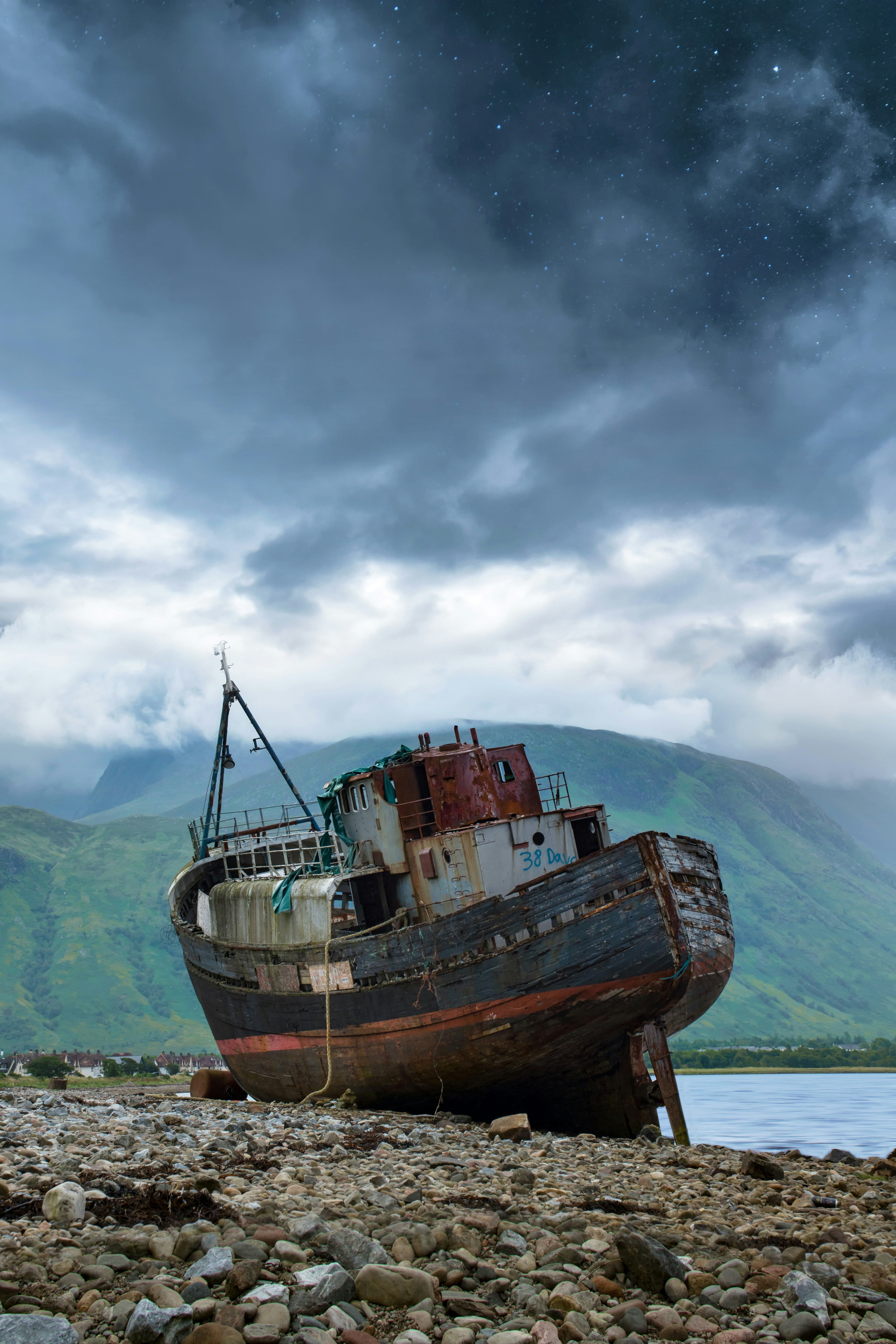
Siresolus
By Bailey Bridgewater
The night I coughed up seaweed, my grandmother guided me to the pier. The tide was silver in the moonlight, the undertow strong. As algae filled my lungs, she told me, “never kill a man who knows sea birds.” I kissed her cheek, lips closed against the needles replacing my teeth, and I dove into the waves.
My sister-sirens sang in chorus to lure men to the deep. They sang for their meals, for the future of our kind. They gave their bodies in sweetness, their songs sugar and salt. They stabbed their stupefied men swiftly when the time came, and they did not suffer. I was different – a Siresolus. The siren who hunts alone.
I stalked ships, learning the souls onboard. I selected the vilest prey, the devils that tormented their crews. I singled them out when they went out on deck for a smoke or a swim. I choose the ones no one dared to follow, and I sang until they followed me.
I sang in minor keys, dark choruses of pain and redemption, death and violence. The men I selected knew their fate, but they came to me resisting. I wanted it so.
The ship that lolled on the surface that night was stained and lightless. There were women on board, women bound and gagged and filthy, women with eyes wide as moon jellies and as soft. The men who held them beat them, groped them, starved them, all under the guidance of one set of approving, cruel eyes.
A man who knew the seabirds.
Gulls circled him on deck, landed on the surface when he swam in the sea. Cormorants were entranced, powerless as the women held captive.
I could not resist.
The fine pinholes I made in his arteries left ticker tape crimson trailing along the surface. The sharks arrived and I let them play, circling him as he screamed. The sea birds screamed as I feasted. I threw chunks of flesh to satiate them.
But there was no appeasing Poseidon, father of these lesser Gods, the men who knew the sea birds.
The horizon swirled green. The tide reversed. My siren sisters came to me. The rusted ship splintered under crashing waves. The women sank around us, and we collected them like tiny shells, stroking their skin until scales emerged and seaweed grew in their lungs.
The ocean retracted, gathered, water forming a wall onto which all sirens were lifted, tangled in algae, sliced by coral, to be dashed onto the rocky coastline of the land we had left as girls. To die there, drying like common fish when the sun arose with the day.
We sang as we hurtled towards shore, not for Poseidon, but for ourselves. We crashed upon the sand, tails thrashing, gills yawning.
As the globe of fire ascended and the water shone placid, my gills sealed shut; the seaweed drying in my lungs.
I coughed into the sand through teeth no longer razors.
An Interview with Bailey Bridgewater
Why did you write this piece? Honestly? I saw your prompt and saw the perfect opportunity to distract myself from the novel I’m supposed to be writing. When I’m working on a book, I end up producing a lot of flash fiction and short stories. I think of them as a kind of byproduct of any sustained creative project. My mind needs to go on those little tangents to be able to stick with the longer piece. I’m not sure if that’s the result of some undiagnosed ADHD or if most writers experience the same thing, but I’d love to know!
Why do you write? Compulsion. When I hosted a panel of other writers for my publisher last year, I asked the participants if they would still write if their finished drafts would immediately burst into flames and no one would get to read them. I was shocked by how many said ‘no.’ I write because I have to. I would still do it if it was just me and a typewriter on an iceberg with no hope of rescue. Which, aside from the starvation, actually sounds sort of ideal….
What are your favorite and least favorite parts of writing? That moment where a character is fully developed enough that they gain the ability to surprise you. When I’m writing based on an accepted proposal, I already know what the plot will be because I’ve had to outline it. Yet after a character has gotten really fleshed out in the writing, there can come a time when it’s no longer right for them to do something I said they were going to do. I don’t force it. I’ll change the plot before I’ll have a character go against who they are. Readers won’t forgive someone acting out of character, and they shouldn’t.
What other writing projects are you working on? I’m working on my third published novel, The Bayou Keeps the Bones, which will be published by Bold Strokes Books in August. It’s a crime novel, but it’s also developing a strong Southern Gothic tone, which I’m excited about.
Bailey’s Links
News
We are thrilled to be accepting submissions for our Winter Solstice Issue!
Winter and Winter Solstice (Open December 25- January 20): While February might feel a little late to be celebrating winter solstice, we want to help our readers get through the last full month of winter with a few stories that bring back the magic of the season. Tell us about people trapped in a cabin during a blizzard with the spirit of someone looking for revenge. Tell us how the fairies who live in the twinkle lights turn bitter as they await the spring. Show us ghosts that are hanging on to their last moments like winter is hanging on to the world!
Christmas Ghost Story Challenge Wrap Party
We had a fantastic time writing horror and paranormal themed novellas during the month of December. Today at 10am, subscribers will receive an invitation to the wrap party for the challenge.
While several of us will be celebrating finishing our novellas, the party will also provide a chance for you to come and talk about your hopes and goals for the new year and what you learned as a writer in 2025 (we’ll also have a dedicated chat thread for the Stranger Things finale!).