
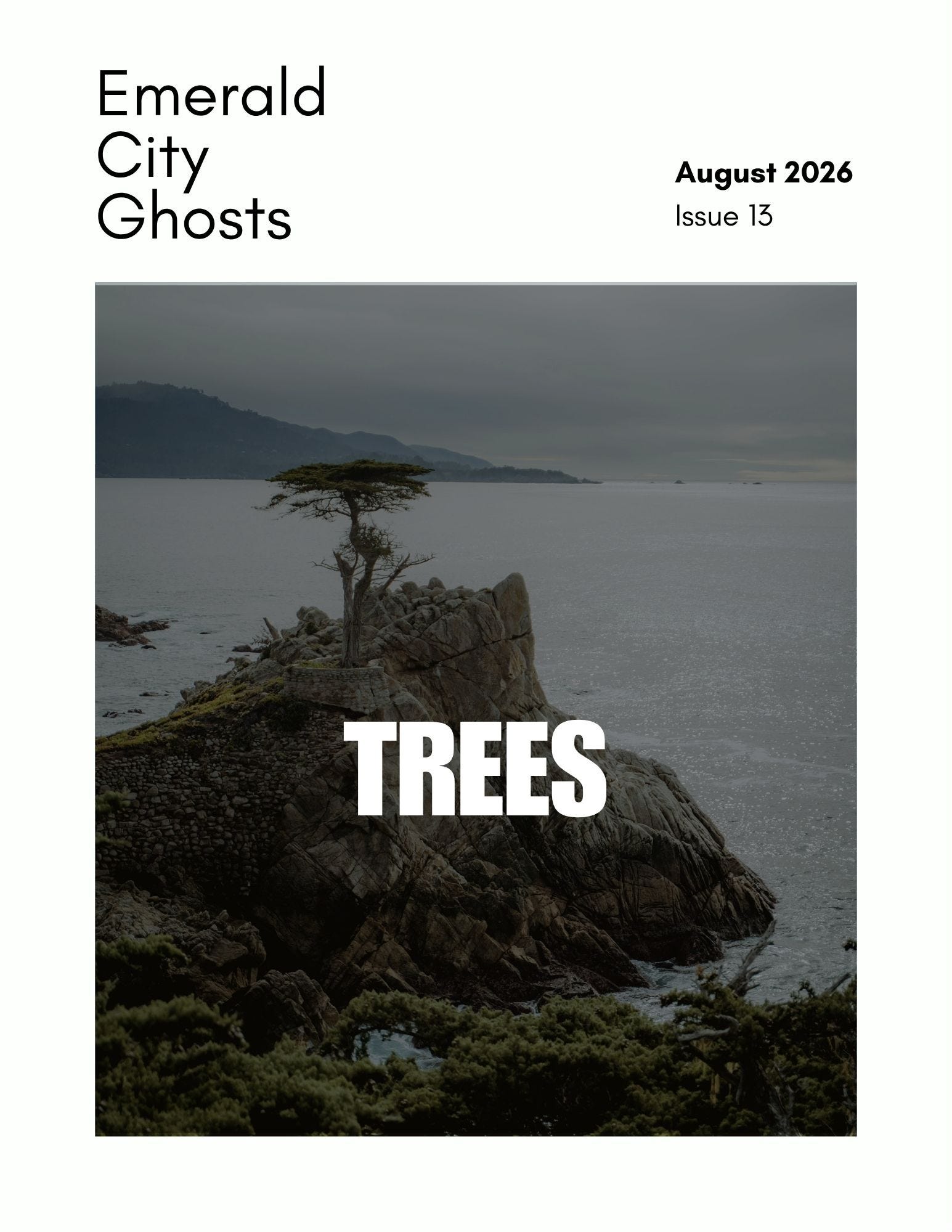
Issue 13: Trees
Driving along the winding forest backroads of the PNW, it’s easy to imagine that every square mile of this land is haunted by something, and for many of us, I think it truly is.
Dear Reader,
The Pacific Northwest is known for its trees and forests and the shroud of mystery they create. Driving along winding backroads sometimes feels like driving through tunnels with the way that the trees hang low and obscure the light. It’s easy to imagine that every square mile of this land is haunted by something, and for many of us, I think it truly is.
Maybe this goes without saying, but I thought a lot about trees this month. I thought about the dogwood my friend chopped down because it was falling apart branch by branch, occasionally taking part of his fence with it. I thought about the Sitkas that populate the sparse landscape of eastern Washington, haunting my history and reminding me of a time that was simpler in the moment but painful in the long run. I thought about the lush, dewy forest at the camp where I spent so many college summers, and I think about all the friends I met and lost during those years.
Friends, memory, loss, love, and regret haunt the forests of our homes and the forests of our minds. This month’s stories remind us of that reality.
We hope you enjoy!
Lo Corliss
Table of Contents
Start Praying
By Bradley Ramsey
Reruns
By Diane Funston
Bound
By Shannon Layne
The Cherry Tree
By Katrina Powers
Don't Answer
By William R. Crichton
We’d like to start this month’s magazine with our summer short story contest winner (writers received a prompt, wrote their stories, and submitted them all within a 24-hour window)!
Thank you Bradley Ramsey and everyone else who participated!
Start Praying
By Bradley Ramsey
Sean Philips and Ed Faria both sat quietly on the roof of what used to be the Valley View Mall in the city of Bend, Oregon. It was a building that had seen countless stores come and go.
Department stores, a cosmetology school, and even a children’s hospital once lived inside the walls beneath them.
Now it was just a corpse, surrounded by asphalt. A parking lot with fading lines stretched out in front of them. To the naked eye, it looked empty, but that was far from the case.
Sean lit one of the cigars he’d been saving for a special occasion and took a long draw. It had a sugar tip, one that mingled beautifully with the bitter smoke in his mouth. They were certainly worth the wait. He let the smoke out slow as he watched the sun inch closer to the horizon in the distance. The orange and red hues of twilight bled across the sky.
“Why do they only show up after nightfall?” he asked, glancing over to his friend.
Ed shrugged as he took a drag from his own cigar. “Goddamn. That’s a good cigar.”
Sean chuckled. “Yeah, I figured if I didn’t bust them out now, I’d never get a chance.”
Ed didn’t laugh. He offered a smile, but it didn’t reach his eyes. Sean thought he saw tears forming beneath his irises, but Ed looked away before he could tell.
A suffocating silence fell over them like a blanket. Even the ambient sounds of nature couldn’t save them. They were the only two living things left in Bend, Oregon, after all.
“Fireworks are all ready?” Sean asked, trying desperately to fill the silence.
Ed nodded. “Yep. We’ll send them up after sunset. Another twenty minutes, maybe.”
Sean looked back to the parking lot. The sun dipped ever lower.
“You believe in God, Ed?” he asked.
This time Ed did laugh. “Given the events of the last two years, I don’t think I’ve got a choice.”
“Yeah, that’s fair. After all that’s happened, I can’t say I’m a big fan of the guy.”
Two years ago, humanity proved the existence of the afterlife. They took a photo of the other side. A single image, so blurry it was hard to make out, but that one sin was enough to seal the gates of heaven forever.
Souls were suddenly trapped on Earth when they died. Forced to watch life go on without them. Ghosts went from spooky campfire stories to a part of everyday life. And something else came with them.
Ed picked up the bottle of whiskey sitting between their foldout chairs and took a swig. “Okay, hypothetically, what do you think is going to happen if they get us?”
Sean hadn’t brought it up, but he’d been thinking about it. “Well, I figure they’ll eat our souls or something, I don’t know. Maybe they’ll wear our skin like suits.”
Ed shook his head. “Wear our skin? They’re ghosts, Sean, not one of your cryptids.”
Ed held out the bottle and Sean took it from him. “They ain’t ghosts, Ed. You know that just as well as I do.”
“Well, you know, they’re non-corpus or whatever.”
Sean almost spat out the whiskey burning in his mouth. “Non-corporeal, you mean?”
“Yeah, that shit.”
Sean set the bottle down. “I wish I knew. Might be less terrifying that way.”
Ed sat back down in his chair as the last rays of sunlight clung desperately to the clouds above them.
“Suppose it’s about time to launch the fireworks. Remember, we need to look for shadows. Ghosts don’t cast a shadow. Demons do,” Ed said.
Sean nodded. “Got it. Let’s see what we’re dealing with.”
Ed went to launch the fireworks as Sean stepped up to the edge of the building. As he looked down into the abyssal black of the parking lot below, he swore he felt something looking back at him.
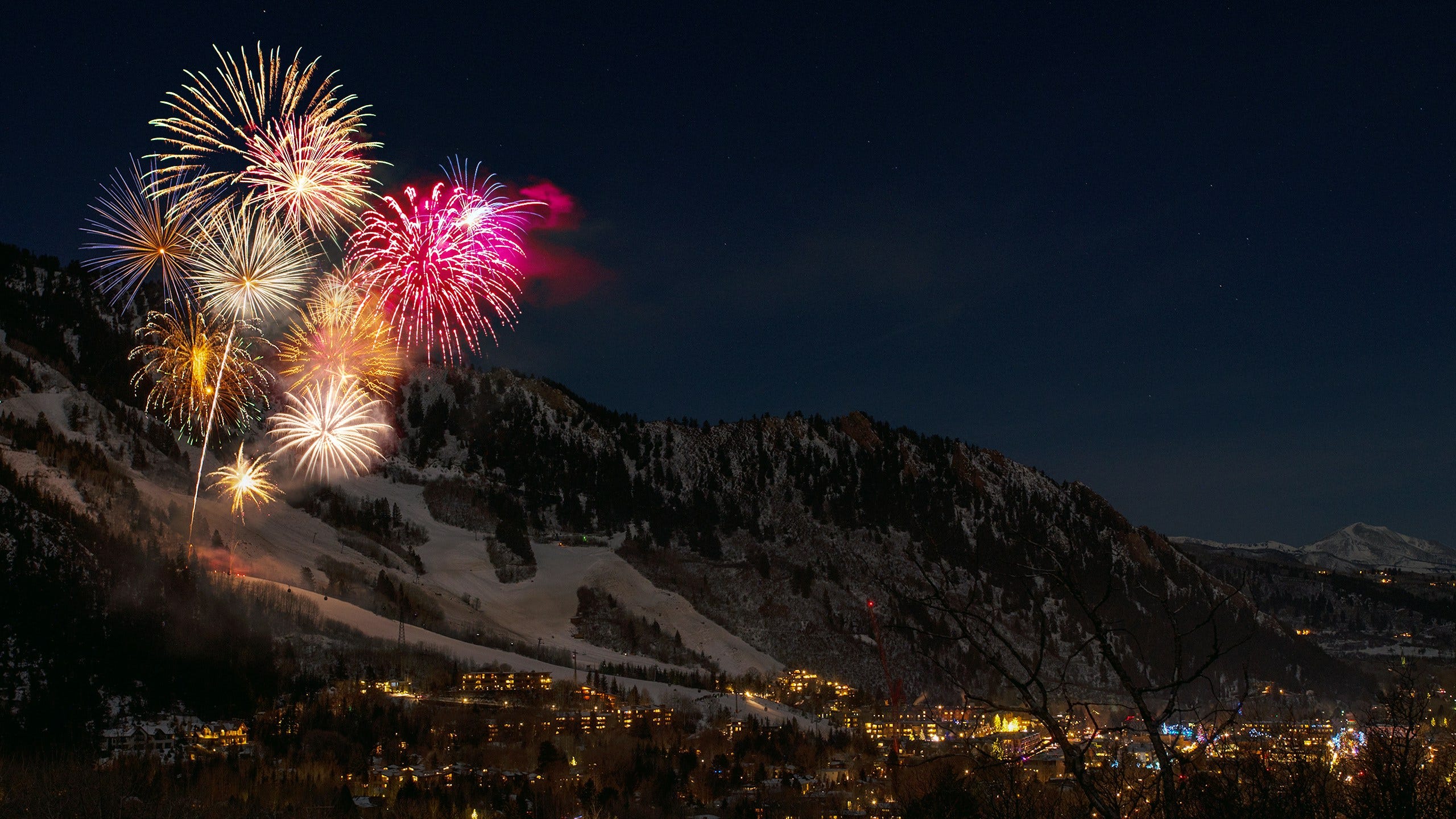
As night took over the landscape, the first firework sailed into the sky with a piercing whistle. Sean’s eyes followed it into the sky as it exploded into a spiral pattern of brilliant red, white, and blue.
His eyes shot back down to the parking lot below. For the briefest moment, the glow of the fireworks showed vaguely human shadows standing perfectly still across the parking lot.
There were too many to count.
Sean’s mouth went dry as more fireworks exploded in the sky above him. The peppery smell of gunpowder filled his nostrils and as he started counting. The featureless silhouettes stared back at him without eyes.
“Ten…twenty…Jesus Christ,” Sean whispered.
Ed appeared to Sean’s right as he finished counting. The cigar was shaking in his hands.
“Well, how many we got?” Ed asked, shouting over the sound of fireworks exploding above them.
“It’s uh…it’s a lot,” Sean replied.
Ed looked down as the fireworks once more revealed the things waiting for them in the parking lot. His eyes went wide.
“What the fuck are we going to do?” he asked.
Sean picked up the bottle of whiskey and took a long swig.
“Start praying.”
An Interview with Bradley
Why did you write this piece? I’ve been wanting to submit something to Emerald City Ghosts since I first encountered the publication on Substack. When I saw the challenge and the prompt, I immediately got an idea.
I have a small connected universe where the afterlife has been lost to us, and spirits have become a part of everyday life. In these stories, demons often find their way into the fold, adding a layer of horror as well.
So, the prompt here immediately made me think of that concept, and I went from there. The phrase “Ghosts don’t cast a shadow, demons do,” also came to me early on, and I made that the basis of the piece.
What other writing projects are you working on? I currently run The Writer’s Journey on Substack where I post short fiction, poetry, and articles on writing. I also host three podcasts and various types of writing prompts and writing challenges.
Outside of that, I’m currently drafting a cosmic horror novel that’s intended to be the first in a trilogy. Separately, I’m working with a small team of artists and animators to bring a series to life that a friend of mine and I have been developing for many years. Our next goal is to pitch it to a network once we have the pieces in place.
Have you ever experienced anything paranormal? Nothing outright paranormal, but I have had several odd encounters, and one instance where I swore a disembodied voice shouted at me while I was writing. More circumstantial than anything, but I do have a belief in the paranormal and a curiosity to explore it both in my work and in real life.
What are your hobbies? Do they ever play into your writing? Outside of writing, I am a huge console gamer and have been my whole life. I play on PlayStation, Xbox, Switch 2, and so on. I also worked at GameStop for 8 years back in the early 2000s, so gaming has been a part of me everywhere I go.
And, unsurprisingly, gaming plays heavily into my work. I get inspired all the time by new stories and experiences I’ve had, particularly with indie games.
Do you have a favorite place to write? I have a home office where I work and where I do a lot of my writing. I do really enjoy working at coffee shops, though. I’ve also been to a few Kava bars around the U.S. and those have been really fun to relax and write at as well.
Why do you write? I knew I wanted to be a writer at a very young age and never looked back, but beyond that, I think I’m trying to create answers to questions that we, as a species, cannot answer in the here and now.
Where does inspiration come from? Where do we go when we die? What’s out there in the universe beyond our planet? These big questions are things I try to answer in my work. I always say that, in the absence of answers, anything is possible.
What are your favorite and least favorite parts of writing? My favorite part about writing is the flow state that you can achieve when you are fully into a project or story, and the world seems to fade out around you. It’s such an incredible sensation.
The least favorite part is honestly the editing. And not the improvements and broad strokes; I mean, like the technical stuff like grammar and such. Even writing my whole life and working as a writer professionally, some of the rules in English still escape me.
Tell us a few facts about yourself—anything from where you live to whether you like cilantro. You know, I actually do like Cilantro, but I’m going to add a few more facts here, haha. I’ll get another hot take out of the way as well: I like pineapple on pizza. Yep, I said it.
A couple other cool facts: I used to be a ghostwriter for about 5 years before I came to Substack. I wrote countless novels in a wide range of genres, but you won’t find my name on any of them.
Beyond that, when I was a ghostwriter, I also spent time as a freelance game journalist. I reviewed smaller indie games and published hundreds of reviews, many of which are still online today.
Is writing your full time job? What do you do in your spare time? I do write professionally in my day job. My current job title is Content Marketing Manager, and I’ve been working as a professional writer in some capacity for over ten years now.
When I’m not writing for work, I’m working on all the things I do for Substack, my podcasts, and the broader writing community. My actual free time is rare, but when I do get time to unwind, I’m usually gaming.
Is there anything you wish we would have asked you? I think a question about the genres you write—or how you would describe your own writing style—could be fun. So for me, I write cosmic horror, sci-fi horror, and psychological horror, and I also dabble in fantasy and poetry as well.
My style is what has been described as “cinematic.” I’ve honed in on a nice balance of detail, pacing, and dialogue that I think helps my writing feel like a movie or TV show in the sense that it keeps your attention and it’s easy to visualize without breaking immersion.
I also tend to experiment a lot with my work. I’ve written several branching narrative stories on Substack and elsewhere with multiple endings and paths, for example.
Bradley’s Links
Author Site
Substack Profile
BlueSky
Threads
Instagram
TikTok
Linktree
Reruns
By Diane Funston
If there’s a haunting in that house it’s me
Old clapboards back east wheezing
in the frigid wind of winter
After all, the place is 103 now
and who can say but the very old
what our bones will tolerate

She was 20 years young
when my family grew into her
gray siding hunter green windowsills
the color of November sky
When I came along there was
yellow outside with a splash
of wine for the trim
although beer was the working class
escape of choice, and a lot of it

To drive by now is dangerous
for that very reason, the drive-by
She still wears her yellow dress
but it’s torn in a few places
and no one mends anymore
The magnolia tree I planted
with glorious pink nipples
nursing spring from winter manhandling
every April that still bullied with blizzards

My living spirit is still in that kitchen
more yellow under the Saturn ring
of unflinching fluorescent light
Drunken arguments still not settled
after decades of deceased warriors
lie in rot or in ashes under marble
It doesn’t matter anymore
I’m the only witness
like a child actor
who watches in sadness
at the late night reruns
An Interview with Diane
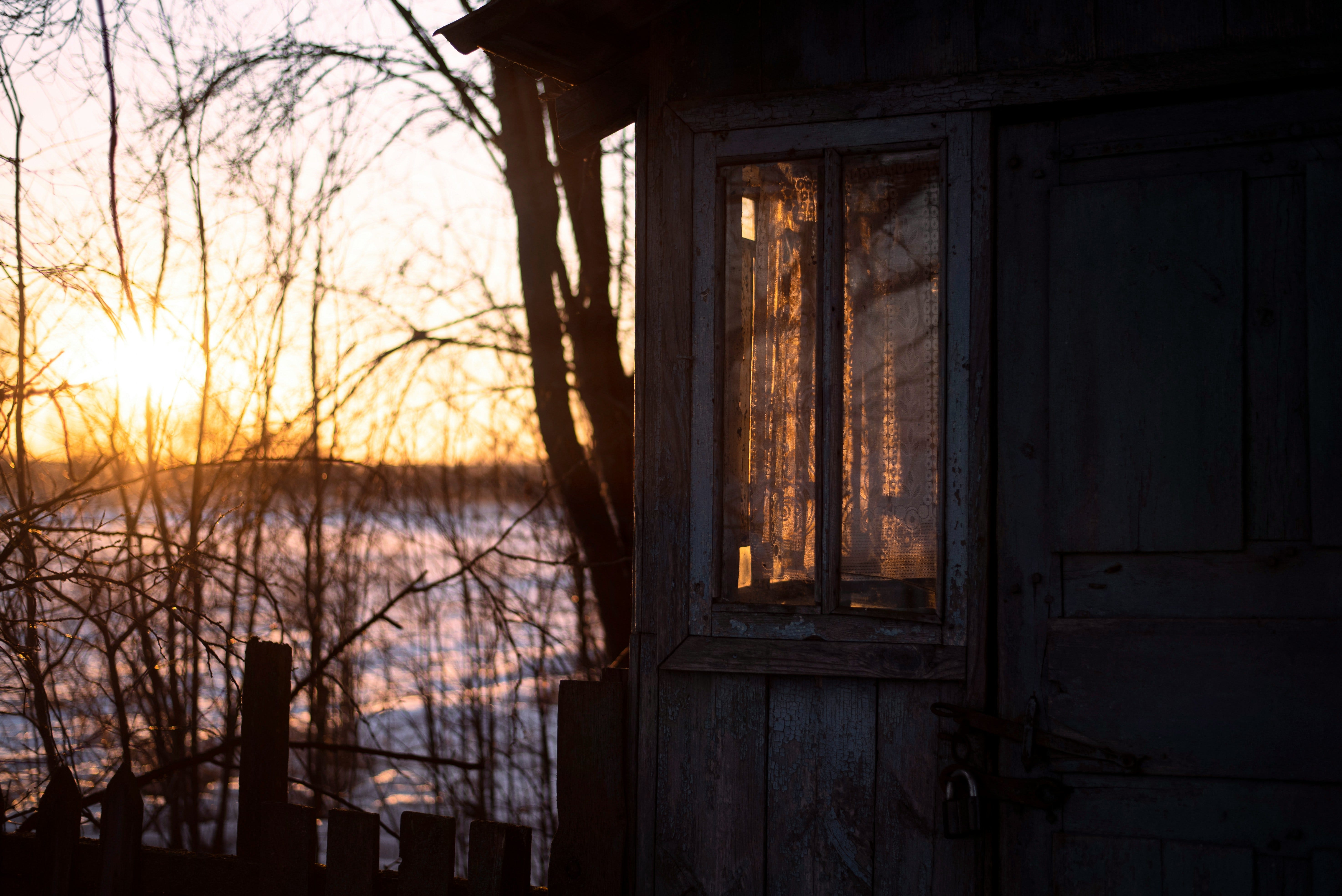
Why did you write this piece? The image is my childhood home in Rochester, New York. Growing up in frigid winters in an old house with alcoholic family arguments. I was trying to explore decay. Of the old siding, the weather, the changing of the old neighborhood to a dangerous place in the present. I’ve been excavating my past in poetry for years.
Have you ever experienced anything paranormal? Yes. I have strong empathy to negative energy. I can tell when someone is disingenuous. I also experience premonitions in dreams occasionally.
What do you like about the horror genre? Horror makes our own lives seem better. Better than the victim of natural or supernatural dread.
Is writing your full time job? If not, what do you do? I am retired from working with adults with developmental disabilities. I also worked with children at risk and adults with mental illness.
Tell us a few facts about yourself! Anything from where you live to whether you like cilantro. I live in a small rural town in California outside Sacramento. I have a huge garden and many fruit trees. I’m married to my best friend and have 2 tiny spoiled dogs. My chihuahua, Zora, is under 5 pounds and my rat terrier, Penelope, is 8 pounds. I love cilantro.
Bound
By Shannon Layne
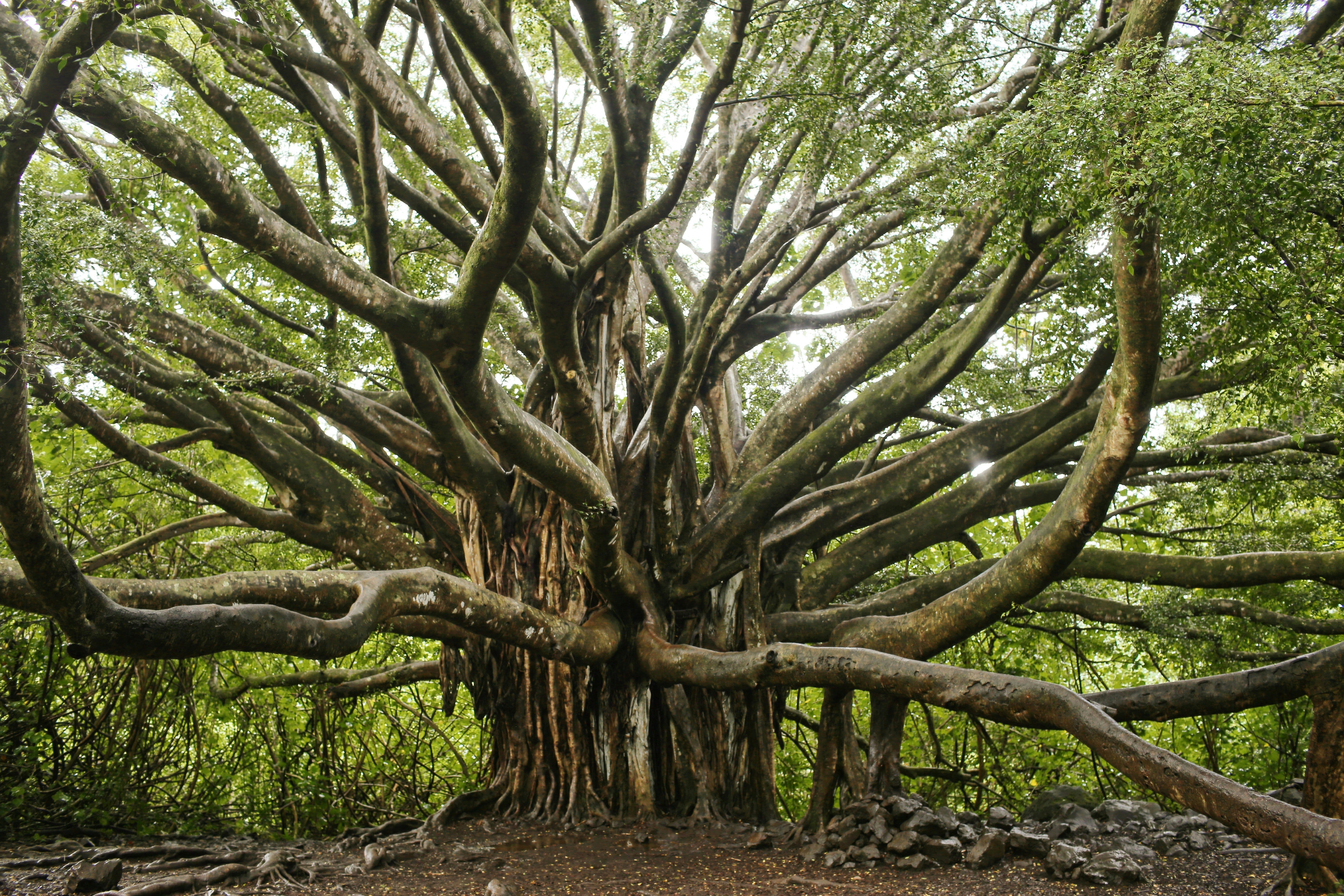
The path to my mother’s hanging tree is well worn, the dirt trodden smooth under my feet. I have flown lightly along this path in the past, almost skipping in and out of sunlight and shadow, but these days I move slowly. My hands rub my swollen stomach around and around. The baby flips and rolls beneath my skin like a fish through waves. I reach the tree well, the space around the trunk hidden by hanging branches and deep green leaves. It is quiet in the dappled shade. But I can hear her voice, still. Her sharp shrill laugh. See her eyes, bright and sly.
They would have burned her but I knew her smoke would have choked the entire village, coated throats with black ash that charred and corroded for days. I begged them to hang her instead, to string her high from the strongest branch in hopes she would be closer to sky and sun and less likely to linger. I sit at the base of the tree and sing to her, the way I did when she was alive and her fingers were beginning to smolder. It was the only thing that calmed her, that cooled the fire. Any melody as long as it came from my lungs, breathed into life the way embers exhale wisps of smoke.
I hoped that a death by air would soothe her restless soul but I also wanted to keep my mother away from earth, and my fear is that she knew that. Fire ravages earth, eats and eats until it can gorge itself no longer, but in the air she could be free. Free from her nature to burn and to rage, the people and the places she set aflame, the anger so often found in her words and on her tongue. I fight my own nature even now, every day among people who have never become distracted by the relentless throbbing of their neighbor’s carotid. The others who walk in peace, blissfully unaware, untormented by the rush and flow of a stranger’s heartbeat fluttering beneath fragile skin. We all have our vices, my mother would say. Fire hers and blood, mine.
I keep my lips closed. I turn away from the arteries and the tributaries of veins on the baker, the shepherd, and I close myself into our home of brick and wood until I stop shaking. My mother used to watch me struggle and fight, and she’d sigh and cluck. You can’t help the way you’re made, the way I made you. Why fight it? We can always find new places, new souls to burn and drink and we can fly to them all together. I’d shake my head, lips still tightly closed. No. No. I would not give in to the part of me that thirsted and raged. In these moments I’d allow my mind to circle a carousel of faces, all drained dry, before I developed my control. The gray tint of dead flesh. How many times did my mother find me soaked in crimson, sated and afraid? How many times did she hide me in her arms, crooning to me in turn as she cleaned a stranger’s blood from my mouth, as we ran somewhere new? I remember the empty eyes and the light that fled with every swallow, drowned by my greed. Every light that flickered out tarnished me further, another black mark carved into my bones. My mother would sigh in frustration and stroke my hair. She didn’t understand me but she let me be, didn’t try to force me. She brought me cool water to soothe the burn. But she didn’t smother her own flame, unfettered by guilt herself. She just rushed us away when she burned to find freedom somewhere else, and I knew sooner or later they’d catch up when there was nowhere left to run. The only one who could calm her was me, and even I wasn’t enough to stop her every time. She would shove me out of the way sometimes when I’d try, her fingers like bright coals and my skin bears the marks of her burns in the shape of fingerprints across my chest and shoulders and belly.
And I didn’t protect her when they came. I begged them to go, I told them we’d leave, but when they brought the thick braided hanging rope they’d soaked in blood and then let dry I let them drape it around her neck. I stood useless and quiet as a star. Maybe this was our penance. Maybe this was because of me and all the still crumpled bodies, a fair trade, one life for so many. I always thought there would be some kind of retribution, some price demanded. So I cried. And I watched. And I did not drain dry the ones who took her from me in hopes it would bring me mercy when no mercy had ever been shown to me but by her hands, even when they scorched me. She spoke only once more, her last words to me, and it explained what I already knew, why she couldn’t fight the rope or simply burn it into nothing: Only blood quenches fire.
When my pains start I go to the tree. I let agony roll over me like waves flooding a shoreline, sand disappearing inch by inch. The midwife hears, she comes to me knowing it is my time, somehow. Just as I scream the baby free, just as she slides into my hands. Precious and fierce, like a dragon. My baby blinks in the fading light. I hold her in shaking arms, her skin warm against my own. Finally face to face, two rivers meeting the same sea. I feel the pain of birthing her fade as a new, more familiar pain rises from my chest to inflame my throat. No, no, no. Not now. The midwife is helping me, and she’s too close to the hanging tree. I look up. The branches are lowering somehow, hiding us from the path entirely. I feel a phantom hand brush my cheek. I kept my mother from earth but I forgot that air feeds fire with every breath. My blood is soaking into the roots of the tree, deep into rich soil. I can almost see my mother’s smile, wicked as a blade. My throat aches and throbs. As she wraps the baby in clean cloth, the midwife’s pulsing veins beneath her skin are clear to me as a full moon on a black night.
I look at my baby. Her dark eyes are fixed on the midwife’s neck the way no newborn’s should be capable of. I feel her desire echo my own through the cord that still binds us, my blood and hers still mingling with every heartbeat. My littlest one. I strike as the midwife leans in to stroke my baby’s cheek, unaware. At the very least, I can be swift. Blood is dark and sweet. And this time I don’t fight the urge, my will to resist drowned as the burn, the everlasting flame in my throat eases. For the first time, it is a gift I covet. The baby latches eagerly, not to my breast but to the bite. Yes, my sweet one, I whisper. She is hungry.
An Interview with Shannon
Why did you write this piece? I'm super interested in exploring themes of ties right now; whether that is an emotional tie, or ancestral connection. I wrote this because it was also interesting to me the dynamic of perceived good versus perceived bad especially through the lens of motherhood. The extremely gray area the characters live and make decisions in fascinated me.
Tell us a few facts about yourself! I often resist being perceived.
Shannon’s Links
The Cherry Tree
By Katrina Powers
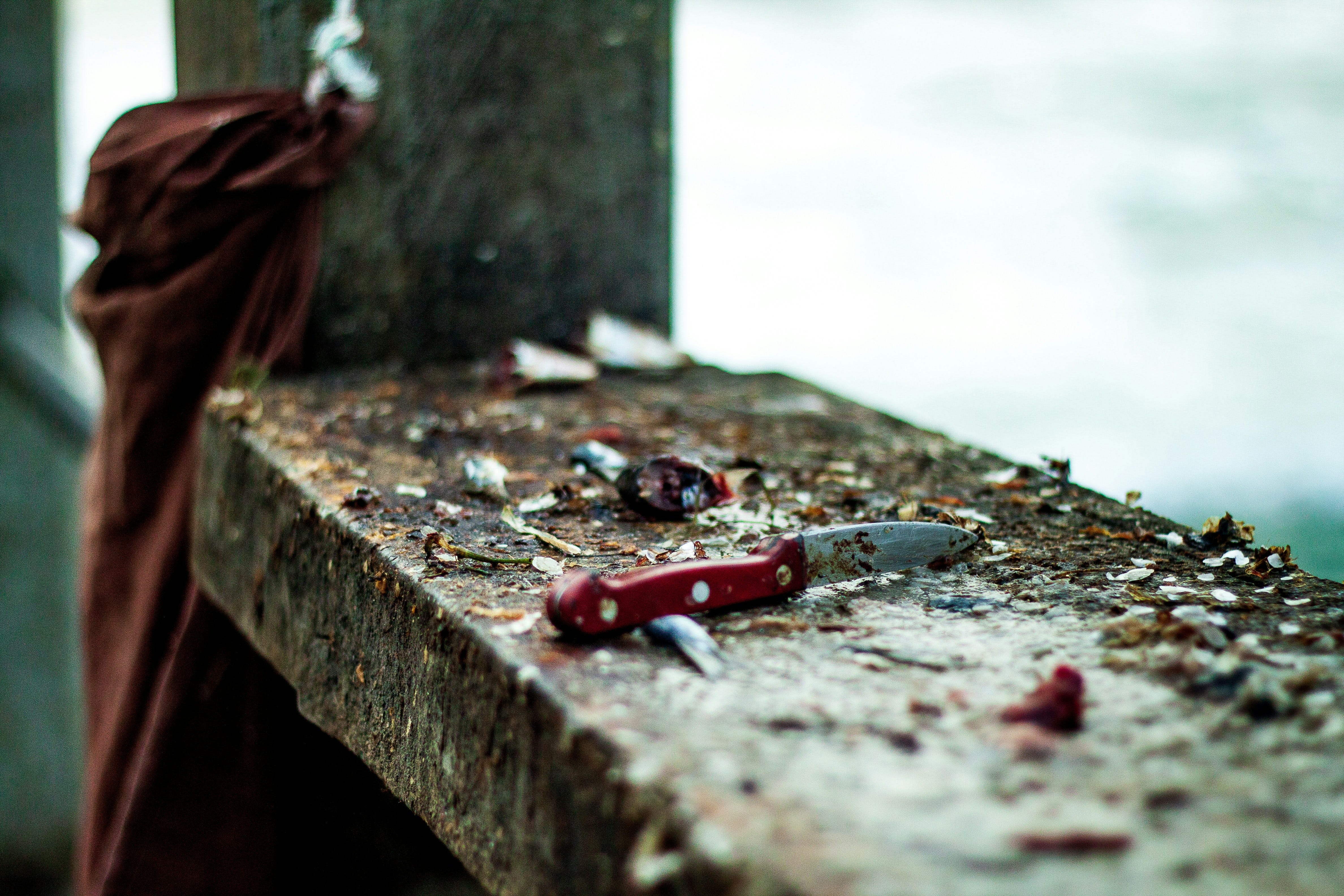
Steph can’t breathe. Her mouth is not available and her nose is no longer working. Tears stream out of her eyes and roll an inch and a half across her temples and into her hair. She can move, but she is not allowed to move. She clenches her fists. She sees the hammer lifted up in the air again. It is enormous, it is impossibly big. It makes no sense for them to use a hammer that big. The chisel clicks into place again. The hammer swings down and connects.
She tries to imagine a better place. She sees herself, maybe about nine years old, clambering into the cherry tree in their yard. Every July, she has to fight the birds to get the best fruit. She imagines that this time it’s easy to find her fill of plump, juicy cherries at the very instant of perfect ripeness. Dark like blood. She eases herself out onto a branch, plucks a pair of cherries from the farthest extent of her reach, places one in her mouth. Nothing can compare to a cherry so fresh that you’re still in the tree as you’re eating it. Her teeth sink into the soft red flesh of the fruit—
The hammer swings down again, and again, beating the chisel into the bone. The bone cracks, then crumbles, then the chisel finally sinks into her red, bleeding flesh. At last the dentist sets the hammer and chisel aside, and begins to dig for the pieces of the wisdom tooth in what’s left of her mouth. She feels that she will drown in her own blood. Her throat seems to be full of blood. The tears pour continuously from her eyes, and she whimpers and gasps and shudders, though she is trying to refrain. The dentist and his assistant pay no attention to her. They don’t talk to her as they normally would when performing an exam or filling a cavity. They peer into her mouth as though they’re mining for ivory and she’s already dead. She can’t even remember how many teeth have already been broken up with the hammer. They are going to do all four. Every time it seems like it might be over, the hammer comes out again.
She’s in the back seat on the car ride home. They sent her away while blood was still gushing from all four holes. Two of those white cotton cylinders in her mouth became soaked through in moments. There is nothing to stop the blood from filling her mouth over and over, forcing her to swallow it. She cannot speak and would, in any case, refuse to speak to anyone else in the car. They drive up the hill from the dentist’s office in Edmonds back to the crummy part of Snohomish County where they live. The descent in prestige is visible as they roll past muddy yards, mossy roofs, rusty cars sitting unrepaired in side yards, firs stretching to the sky. Even poor people can have big trees. At red lights, she opens the door to lean out and spit blood into the road.
As soon as the car stops at home, Steph spits blood into the gravel driveway, right under the cherry tree. She gets out, and blood continues to pool in her mouth, forcing her to spit once more before entering the front door. She looks up and sees a neighbor across the street staring at her in alarm, but no one in her household pays attention to her. Inside, she vomits a stomach full of blood and packs more cotton into her mouth. The pain gets worse as the novocain wears off. There is nothing else to wear off. She was given no anesthesia.
The next day, purple bruises have begun to form across the entire lower half of her face, which has swollen into the shape of an egg or a butternut squash. Today, at least, the idea of going to school is out of the question. She watches “The Price is Right” on the couch, sipping a chocolate milk. Her mother went to work as usual.
In the afternoon, she weakly asks her mother if she might fix her something to eat. “Your mouth hurts, I get it,” came the reply. “Don’t your legs still work?”
Back in school, Steph recounts her ordeal to her friends. Some, wisdom teeth intact, turn pale with fear. The purple bruises on her face testify to the traumatic nature of the process. Other friends are skeptical, telling her that it’s not normal for the patient to be awake during this procedure, nor to have it performed by one’s regular dentist. They explain that oral surgeons will knock you out, and that it isn’t all that bad. Steph is exaggerating, they reassure the appalled members of the group.
The dentist had recommended that she see an oral surgeon, and Steph had tried to argue in favor of this option. It would cost more, but it was not an insurmountable sum. Her mother had talked about a pair of boots that she wanted for herself, then lapsed into tales of woe about her own childhood and adages about ingratitude and stoicism.
At night, Steph sits with her forehead against her bedroom window, gazing out at the cherry tree. It is leafless now, and will be for another two months at least. But one day it will flower, and the leaves will grow back, and the sweet blood-red fruit will slowly grow where the blossoms were. Someday in the future, Steph’s pain will matter to someone.
In Edmonds, in a dumpster behind a dentist’s office, a trash bag begins to rustle. Muffled sounds of tearing and shifting cause no alarm, as everyone went home hours ago. Fragments of four large molars separate themselves from the blood-soaked cotton surrounding them and rise into the air, emitting a yellowish glow. First the fragments rearrange themselves into four perfectly formed teeth, then they dissolve into a cloud of tiny luminescent shards and begin to fly, swarming eastward, toward the tall mountains and away from the water. Steph is already in bed when the murmuration of tooth shrapnel arrives, hovers for a moment above the roots of the cherry tree, then dives down and embeds itself into the damp soil.
Three years later, Steph graduates from high school and moves away. Not to college, like almost all of her friends—her mother was unwilling to help pay for that, or even to permit Steph to continue living with her while she attended—so she is simply moving out to try to make her own way in the world. She gets a stepladder and picks a few cherries for the road. She eats one and spits out the pit in the gravel driveway, setting the others on the passenger seat. Rain falls on her windshield as she pulls out and heads for the freeway.
Once night has fallen, the pit she dropped in the driveway dissolves into a swarm of ivory shards, each one as sharp as a pin and as small as a gnat. Each shard is small enough to fly right through the screen over the window in Steph’s mother’s bedroom.
It starts as a puzzle, more than anything. Steph’s mother has always been clumsy, always happy to tell Steph that she has inherited her ungainliness, has often found bruises she couldn’t remember causing. Now she begins to find freshly bleeding pinpricks first thing in the morning. First, in unobtrusive places like her sides and her belly, then on her arms and legs, later on the palms of her hands, the soles of her feet, and all over the lower part of her face. Her coworkers joke that she has razor burn. She begins to lose sleep, first ransacking the bed to try to find something sharp that might be poking her, or something new that she could be allergic to. Then she sits up late with the lights on, trying to catch the bug or other parasite that has intruded. She fumigates, hires exterminators, researches unusual pests. Fall comes and goes as she exhausts these routes of investigation.
In the winter, Steph’s mother sees dermatologists, allergy specialists, pathologists, trying to find an explanation. All of the doctors are flummoxed. In the spring, the pinpricks begin to cluster on the insides of her elbows, and she finds bruises up and down her arms. There are dark circles under her eyes and scratches and sores around her mouth and on her hands. The dermatologist grows frosty and suggests rehab. It takes time for her to understand that they think she is injecting herself with narcotics. In the summer, the imitation track marks cause her to lose her job. The pinpricks then become scalpel-precise, straight, shallow lacerations. The doctors are now asking about the family history of mental illness. She says that she is neither crazy nor a junkie. The doctors suggest inpatient programs. She stops going to see them.
She is no longer able to sleep at night. She finds a job working the graveyard shift at an all-night gas station near the freeway. But in the fall, the lacerations happen as she sleeps during the day. Soon, the cuts are appearing on her face, her neck, on the soles of her feet. When one of them won’t stop bleeding, she goes to the emergency room to get stitches, and ends up in the psych ward of the hospital. Any implement that could possibly cut her is removed from the room, but it still keeps happening. Eventually, in December, they tie her to the bed. Leather straps hold her wrists and ankles and midsection to the streel bed frame. No one can understand how she is able to continue cutting herself.
In these restraints, she finally sees the yellowish luminescence of the ivory swarm that has been tormenting her. “We’ve come for your teeth,” they tell her. Their high-pitched hive voice is a bone-clattering mechanical hum. “No anesthesia!” the shards exclaim as they dive for her mouth.
“But why?” she gasps. She has no memory of any of Steph’s ordeals. It seems to her that she has committed no misdeeds.
“No anesthesia!” she shards echo as they buzz into her mouth. “New boots!” They extract all of her teeth and she drowns in her own blood.
Steph returns to Snohomish County. She has lived on the East Coast for a year and half. The psychiatrist tells her that he has no idea how her mother did it, but she had clearly been deeply disturbed. After the burial, Steph stands by herself under a towering Douglas fir at the cemetery. The handful of other mourners have dispersed, and there is not a soul in sight. A squirrel surreptitiously accesses hidden nuts in the tree above her. She feels less alone.
An Interview with Katrina
Tell us a few facts about yourself! I live in Maryland. I'm originally from Snohomish County, Washington, which is what drew me to Emerald City Ghosts. It is a uniquely spooky place.
Is writing your full time job? I'm a high school teacher. I decided I was a writer when I was in first grade and writing just makes me feel whole.
What other writing projects are you working on? I am mostly working on short stories right now. I'm primarily interested in mystery and noir, but I've recently branched into horror.
Do you have a favorite place to write? The George Peabody Library at Johns Hopkins University is a favorite place to write. But I wrote this story at home on the Fourth of July.
Don’t Answer
By William R. Crichton
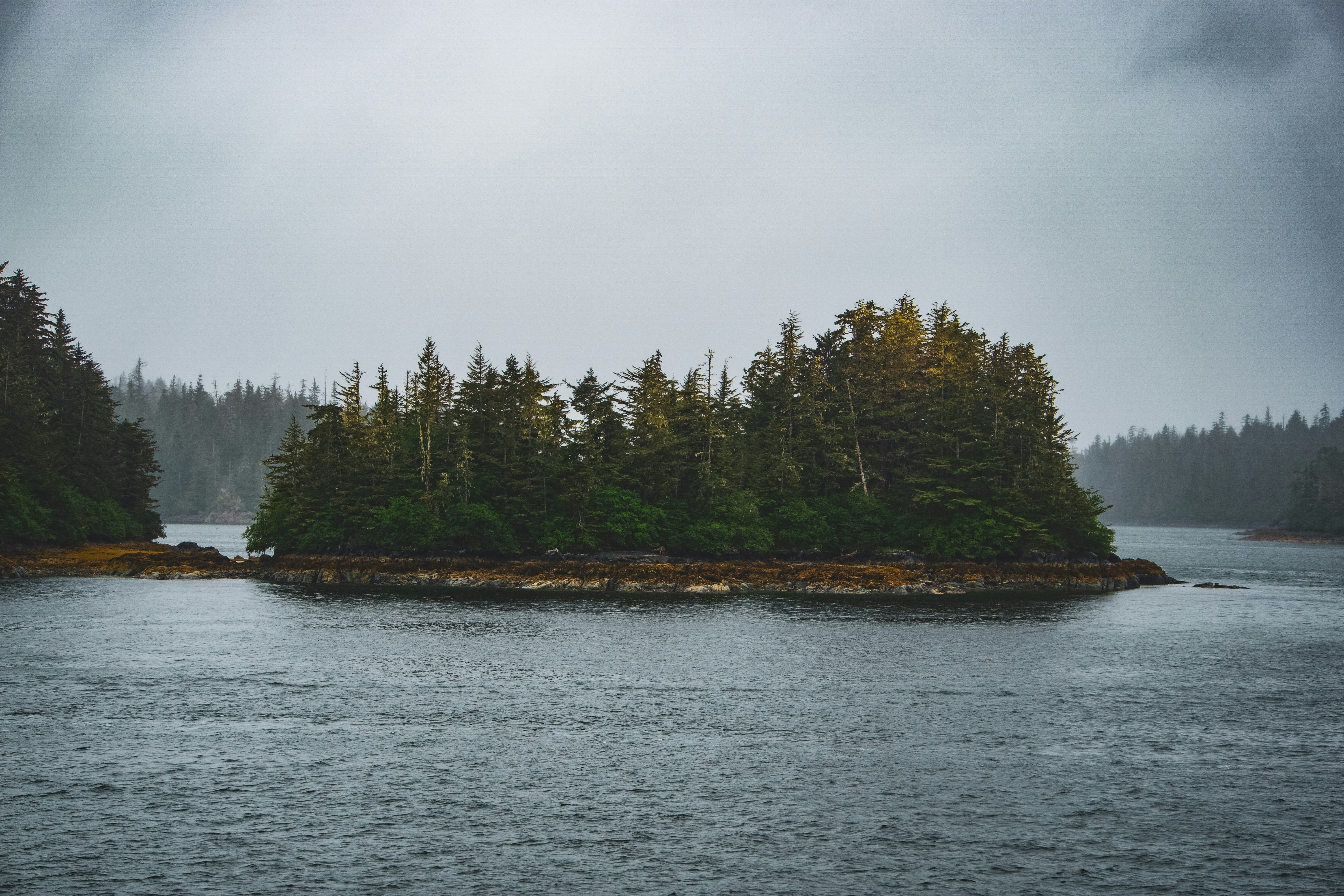
Rain had been falling on the Olympic Peninsula for six days before Sarah Burke started walking, and it did not stop for her. She’d chosen the old coastal route because the ranger station listed it as abandoned, unmaintained since a washout took the bridge at Mile Four. No permits required. No one to ask where she was headed.
Her boots filled within the first hour. She didn’t mind. The trees here rose past anything she’d seen on the Wonderland Trail, cedar and Sitka spruce trunks wide enough to build a house from, and they ate every sound she made. Her own footsteps vanished a few feet from her body. Somewhere past the canopy, gulls called from the coast, but the wind carried it thin and far off, like a memory of a beach rather than an actual one.
The forest felt old in a way that made her walk a little softer, the way a person moves through a house where someone might be sleeping.
The tree came down without warning. She heard the crack first, a sound like a door slamming somewhere below her feet, and then the canopy above her tilted and she was already moving before she understood why.
She didn’t move fast enough.
The trunk caught her at the hip and drove her down into the duff, and for a moment there was no pain at all, only pressure, a great weight that did not shift when she pushed against it.
Then the pain arrived and she screamed until her throat gave out, and nobody answered, because nobody was there to.
When she stopped screaming she took inventory, because inventory was something to do with her hands. Water filter. Four days of food, rationed tight. Flashlight, spare batteries taped in a freezer bag. Knife. Emergency blanket, foil-bright and useless-looking. Phone smashed, dead the moment the trunk had grazed her pack. Left leg pinned from the knee down, and something wrong in it that she didn’t examine too closely yet.
***
She spent the first day proving to herself it couldn’t be done.
She dug with her hands around the trunk where it crossed her leg, and the rain filled the hole faster than she could clear it. She wedged a trekking pole under the wood and levered until her shoulder screamed louder than her leg had, and the tree didn’t move, not a fraction of an inch, because a tree that size weighed more than a truck and didn’t care what she wanted.
She stopped when her hands stopped working right. She lay back and looked at the canopy and made herself breathe slow.
Rescue would come. Someone would notice she hadn’t checked in. She would ration water and food.
By evening the forest had gone quiet in the specific way that made her aware of her own heartbeat. Then a branch snapped, off to her left, heavy, the kind of snap that came from weight rather than wind.
Footsteps. Slow ones.
She swung the flashlight toward the sound and it landed on wet bark and hanging moss and nothing else.
Elk, she told herself. Elk moved like that. Heavy and unbothered.
***
The footsteps came back the second night, and she learned their rule fast because her life now depended on learning it fast. Whenever the light swept toward the sound, the sound stopped. Whenever she turned the beam away, it started again.
She talked to keep herself from thinking about what that meant.
“Bear?” she said, to the dark. “If you’re a bear, say something bear-like.”
Nothing answered. Hours passed, the cold working into her bones through the space where the tree pinned her, and then a voice came out of the black, soft, testing.
“...hello?”
Her whole body went rigid with something close to joy. Another hiker. Someone off the trail, maybe following the sound of her earlier shouting.
“Here!” she screamed, her hoarse throat tearing on it. “I’m here, I’m pinned, help me!”
No answer. Just, after a long pause, the same two syllables again.
“...hello?”
Same pitch. Same falling cadence at the end, the same hesitation before it, like a recording set to loop rather than a person speaking twice.
She didn’t sleep. When gray light finally came through the canopy she searched what she could reach with her eyes, and found no footprints in the mud around her. Only the moss at the edge of where her flashlight beam had reached, disturbed in patches, pressed down in shapes that didn’t belong to anything she recognized.
***
By the third day her mouth had gone dry in a way the water filter couldn’t fix fast enough, and the rain, for the first time since she’d started walking, stopped. Sun barely made it through the canopy, a pale smear far above her, offering no warmth she could feel.
She noticed the moss patches again in daylight. They weren’t random. They formed a rough ring around the fallen tree, around her, each depression roughly the size and shape of something standing still for a long time.
She counted them. She stopped counting when she reached a number that made her chest go tight.
***
The third night, it came closer.
Her flashlight, sweeping out of animal instinct rather than any plan, caught something at the tree line for less than a second. Not a face. Layers of wet moss hanging in strips from something that stood too tall and too still, human-shaped only the way a scarecrow is human-shaped, by the simple fact of having a trunk and two long limbs.
It froze the instant the light touched it. Went rigid, indistinguishable in that stillness from any other trunk in the understory.
She stared until her eyes burned.
Then, because some part of her needed to know rather than guess, she clicked the flashlight off.
Silence swallowed everything. Ten seconds. Twenty. Her own pulse loud in her ears.
Then breathing. Close. Closer than the tree line. Close enough that she could feel, or imagined she could feel, a change in the air against her face.
She snapped the light back on, hand shaking so badly the beam wobbled across the clearing.
Nothing. Only trees, only moss, only rain-dark bark stretching up into the fog.
But the tree six feet to her left. That tree had not been there an hour ago.
***
It spoke again before dawn, and this time it used her own voice.
Not close to it. Exactly it, the same rasp her throat had worn down to, repeating words she’d said hours earlier without knowing anyone was cataloguing them.
“I’m okay,” the dark said, in her voice.
“Someone will come,” it said a little later.
She lay very still and listened to herself being quoted back to her, and somewhere under the fear a colder understanding settled in. It repeated the same phrases over and over, the way a child repeats new words, testing the shape of them in its mouth. Then, gradually, the words started to change. Still her voice. New sentences.
“You can sleep,” it said.
Later: “You don’t need to hurt anymore.”
She understood then that it hadn’t been mocking her. It had been practicing. Learning the shape of comfort from the outside, the way something might learn a language by listening at a wall, and using it now the only way it knew how.
She remembered, from a bar two nights before she’d started walking, an old man telling her not to answer voices in the old growth after dark. Especially, he’d said, wagging a finger stained yellow with tobacco, if they sound like somebody you love. She’d laughed at the time. It had seemed like the kind of thing old men told hikers because they thought it was funny.
***
By the final night her batteries had gone thin, the beam dimming to a weak yellow cone, and the last of her food was long gone. She drifted in and out, the pain and the cold trading places at the center of her attention, and somewhere in the last hour before dawn she surfaced enough to see it had come almost into the light.
Moss where skin should have been, thick and wet and hanging in the same ropes she’d seen on every tree for six days. Branches rising from where a skull would be, antler-shaped, dripping. Two pale points deep in the dark of it that might have been eyes, might have been nothing at all, holes where light simply refused to go.
It reached one long arm toward her. Not fast. Not the way a predator closes a distance. The way a hand reaches out to someone standing at the edge of something high.
“You don’t have to hurt anymore,” it said, in her own exhausted voice, gentle as she’d ever managed to say anything in her life.
She didn’t take the hand. She didn’t have the strength left to decide either way.
***
They found her in the morning, the search-and-rescue team moving fast once her sister had finally reported her missing. She was alive. Barely, the medic kept saying, barely, like the word itself was doing some of the work of keeping her that way.
Around the fallen cedar, flattened rings of moss circled the trunk like something had paced there for days. No animal tracks anywhere in the mud. Nothing to explain the patterns except weather, which was the word everyone settled on because it was the only word that let them stop looking.
One of the rescuers, coiling rope near the tree line, asked the other in a low voice if he’d heard someone talking out there the night before.
“No,” the other said, not looking up from his work.
“I swear somebody kept saying my name.”
***
She recovered in a hospital in Port Angeles in a cast that ran from her hip to her ankle, and the doctors called it a remarkable outcome given the exposure, given the dehydration, given everything.
Her first night home, still in a cast, rain against the window, right at the edge of sleep, she heard her own voice from somewhere outside.
Soft. Patient.
“You don’t have to hurt anymore.”
An Interview with William
Why did you write this piece? I wrote it because I found an open call and I thought I could do something with it. Which is exactly the same reason I've written every short story I've ever written, except for my first one, which was written just to finish something since I've yet to finish a novel.
The setting came first. It would have been silly not use a PNW forest for Emerald City's Trees issue. I've never been farther north than Monterey, CA, but I watched The X Files, so I have at least seen the setting that I picked. Thinking about The X Files led to thinking about an episode that was set in a forest (although not the PNW): “Detour.” The creature in my story is completely different in most ways, but “Detour” gave me the basic premise of something camouflaged in a forest. Each individual decision from there was just "What would be simple but creepy?"
Do you have a favorite place to write? I always write in my bedroom for the simple reason that it's where my desktop computer is. I have two laptops, but I don't really like laptop keyboards.
What are your favorite and least favorite parts of writing? My favorite part is coming up with the idea for the story. My least favorite part is picking a title. This story was done a day before it was submitted. The delay was entirely due to having to think of a title.
Is writing your full time job? If not, what do you do? Does your day job influence your writing? Writing is not my full time job, but I would like it to be. I'm a geologist, which has little to no influence on anything I've written to date.
What other writing projects are you working on? I'm always writing short stories for whatever open calls I find. I have several novels that I'm working on, but I have no idea when any of them will be finished. At some point, I'm going to start a series of short stories on my Substack, since I can't do a serialized novel (see my novel publication timeline for why a serialized novel is not a realistic option for me). I haven't yet decided what that series of short stories will be.
William’s Links
News
Want to hear our editor’s unhinged takes on the inherently haunted quality of the Pacific Northwest? Care to learn about the weird rituals she occasionally makes up? Interested in reading about her journey in the publishing world?
Want to participate in a monthly write-in accompanied by a subscriber only chat?
Next week we’re launching our paid subscriber tier! Stay tuned for more info!
Another brilliant batch of stories. I especially loved "Don't Answer". So creepy!
Thank you so much for including my story in this issue! I'm truly honored to be featured alongside all these other incredible stories.