
Issue 12: Retro Horror
A return to the haunted past...
Dear Reader,
I’ve been thinking a lot about retro horror movies this month. “The Thing” has been on my mind. It was the first horror movie I saw, tucked away in a mostly abandoned cabin at a summer camp during my college years.
“Stranger Things” has a special place in my heart, too. While it aired recently, the entire concept for the show is built on 80s nostalgia. “Stranger Things” makes me miss an era I never experienced.
Recently, I watched “Salem’s Lot,” based on the book by Stephen King. The film immerses viewers in a rich and colorful 1970s world, and I found myself thinking how cool it was that Stephen King wrote it as a period piece. Then, of course, I realized that he didn’t write it as a period piece. It was a contemporary story when he wrote it in 1975. As I sat down to watch that movie almost fifty years after its original source material was published, I couldn’t help but think that Stephen King deserves respect simply for the longevity of his career and his decades-long dedication to the craft.
Our retro horror theme was born out of these warm and fuzzy feelings toward some of the pioneers of horror. This month, our writers have captured that nostalgia beautifully, and we’re thrilled to share their work with you!
We hope you enjoy!
Lo Corliss
Table of Contents
Nocturnal Me
By G.S.Mucklow
Judge
By Victoria Cullen
Ghost Gnosh
By Axe Cornwell
Nocturnal Me
By G.S.Mucklow
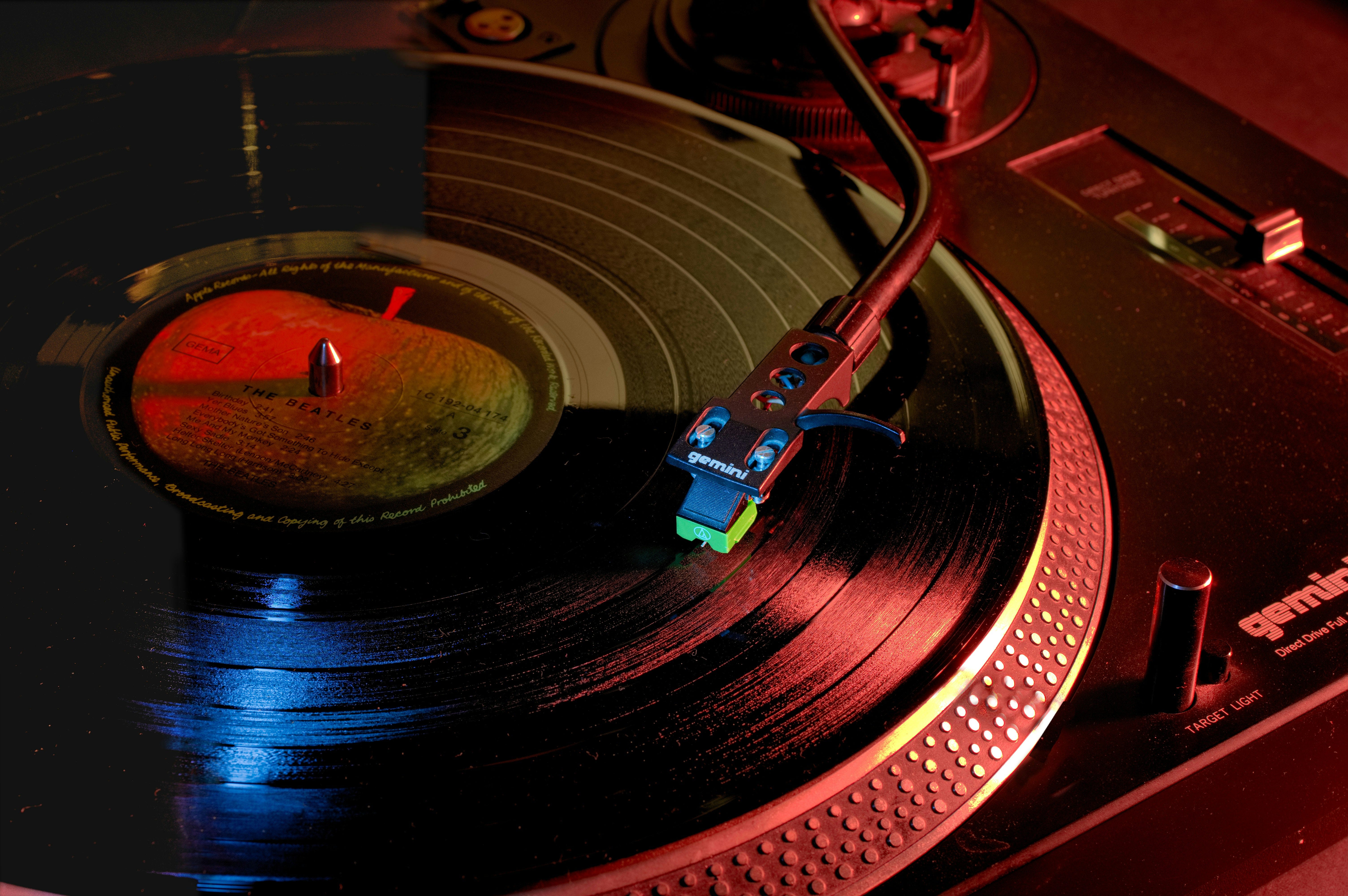
The needle found the groove and Danny closed his eyes.
Ocean Rain was a ritual, not just a record. He’d owned it since he was fourteen, a battered copy from the second-hand bin at Fallout Records on First Avenue, the sleeve worn soft from handling. Three years of being loved. There was a crease at the top right corner from when he’d knocked it off the dresser and he’d never tried to flatten it because the crease was part of it now, the same way the faint smell of cigarettes was part of the Technics. The Technics had been his father’s, and on certain quiet evenings, when the rain was steady and the house felt most like itself, Danny could almost feel the machine watching him.
He told himself that was stupid.
McCulloch’s voice filled the room and the rain sealed the window and for a few minutes the bedroom was the only place in the world. His mother was downstairs, doing the thing she did in the evenings: sitting somewhere that wasn’t quite here.
He thought about Marie. They’d seen The Lost Boys together at the Crest in August, back row, her knee against his in the dark, and when the Echo and the Bunnymen cover started, people are strange when you’re a stranger, she’d leaned into him in a way that meant she understood something. He’d bought the soundtrack cassette the next day. But it was Ocean Rain he always came back to. It felt older than its three years, like it had always existed and he’d only recently found it.
He’d been playing Lips Like Sugar a lot since August. Marie’s song, from the new self-titled album, and he’d worn something into it already. Tonight his hand had gone past it to Ocean Rain without quite deciding to. The Killing Moon. Fate up against your will.
***
He’d read about backmasking in a magazine, playing a record backwards. Judas Priest, the Beatles, hidden messages pressed into vinyl by shadowy hands, audible only in reverse. Danny thought it was stupid. He knew the word pareidolia: the brain finding faces in wood grain, meaning in noise. He was proud of knowing it.
He thought about the article for three days.
He lowered the needle onto Silver, the first track, and turned the platter backwards by hand. The sounds were what he expected: vowels stretched wrong, the music’s skeleton inverted into something that didn’t want to be heard.
Then a voice said his name.
Daniel.
He lifted the needle. The room was very quiet. He could hear rain and his own breathing and, underneath both of those, something that might have been the house settling but wasn’t.
He put the needle back.
Daniel.
It wasn’t quite a human voice. It was the shape of a voice, assembled from available materials. Pareidolia, he told himself. The word felt smaller than it had a week ago.
He played the second track backwards.
The voice said his street. His precise number. Spoken with the patience of something that had simply always been ready.
Danny sat on the edge of the bed with the sleeve in his hands and read the track listing until the letters stopped meaning anything.
Track two: Nocturnal Me.
He’d read those words a hundred times. He hadn’t seen them until now.
***
He waited until 2am. The house held the silence of a held breath.
He lowered the needle onto Crystal Days, the third track, and turned it back.
The voice described his closet. The drawings on the back wall behind the hanging clothes: a house, a sun, a small figure with arms spread, and beside it a larger figure with a cross gouged through it, scored down through the paint to the drywall, a groove he’d made with a pencil until the pencil was gone and then with a key. The drawings no one had ever seen. That he’d almost forgotten, until now.
The bedroom had been a refuge since he was twelve. Now it was something else. A place that knew him in all directions, including back through time, including the version of him who had sat in the dark behind hanging clothes and tried to make himself small enough to disappear.
He read the sleeve again. Silver. Nocturnal Me. Crystal Days. And at track six:
The Killing Moon.
He left the needle where it was. He didn’t play track six that night. He moved to the far wall, put his back against it, and kept the desk lamp on. He didn’t look at the Technics. He thought about the drawings instead — when he’d made them, what age he must have been, the precision of that crossed-out figure, how much intent there was in a child’s hand scoring through drywall. Around 4am he thought about opening the closet and checking, just to check, and then didn’t. He sat there until the window greyed with morning and told himself he hadn’t slept because he wasn’t tired.
He wondered, sometime before dawn, if it had always been there. Not waiting to be found, exactly. Waiting until he was old enough to understand what it had heard.
***
He lent Ocean Rain to Kyle on Friday. Kyle brought it back Sunday. He’d heard nothing backwards but Bunnymen and hiss.
***
Marie didn’t call Monday. She didn’t call Tuesday. Danny rode his bike through the rain and Mrs Ellison said Marie had gone to Tacoma, it had been planned for a while, hadn’t Marie mentioned it?
Danny rode home and stood in the doorway of his bedroom for a long time. The Technics sat where it always sat. The hallway light timed out and left him standing in the dark.
Then he went in and lowered the needle onto The Killing Moon and turned it back.
The voice described November 1980. Danny was ten years old. His father had come home wrong. That specific quality he’d learned to read from the sound of the front door, the drag of footsteps on the stairs, the stillness that preceded whatever came next. He’d gone to the closet and pulled his father’s old coat around himself and pressed his back against the drawings in the dark.
He hadn’t thought I wish he would die.
He’d thought: I wish he wasn’t. His father as a problem that could be made not to exist, cleanly, without a name for the space left behind. He’d thought it with everything he had, in the dark, with the coat around him and the cross gouged in the wall at his back.
His father was gone by January. The police came and asked questions and his mother answered them and eventually they stopped coming, and the world arranged itself around the absence the way it always does.
Danny had never told anyone what he’d thought in the closet. He had built everything on top of that silence.
The voice said: I heard you.
The rain. The house. A long pause that had no bottom.
Tell her.
The needle lifted by itself, set back down, and The Killing Moon began again from the beginning, playing forward this time, McCulloch’s voice filling the room. Fate up against your will. Through the thick and thin.
Danny stood up and went downstairs.
***
The kitchen light was too bright. His mother sat at the table with tea she wasn’t drinking, somewhere else inside herself. She’d been this way since 1980. Danny had learned not to examine the shape of it too closely.
He sat down across from her.
From upstairs, barely: the record player, still running.
“Mom.”
She looked up.
“I need to tell you something. About the night before Dad disappeared.” The word still sat wrong after all this time. “I was in the closet. You know how I used to go in there.”
She said nothing. Watching him with an expression he couldn’t name.
“I was in the dark and I was angry and I thought—” His voice was unsteady. “I didn’t think die. I need you to understand that. I thought I wish he wasn’t. And then he was gone. And I think something heard me. I think it did something. And I think it wants paying.”
The kitchen held the silence.
His mother looked down at her cup. When she looked back up her eyes were wet, but her face was not the face of someone surprised.
“I hear things,” she said quietly. “At night, mostly. In the hallway. In this kitchen when I’m sitting alone.” She paused. “I’ve told myself it was grief. That losing someone like that does things to you. But it’s been seven years, Danny.” Her hand moved on the table, not quite reaching for him. “I think I’ve been waiting for you to say what you just said.”
The floor dropped out of something in Danny’s chest.
“It’s been in the house this whole time?”
She looked older in that moment than Danny had ever seen her. Not tired in the familiar way, but stripped — like she’d been holding a particular arrangement of her face for seven years and had just now let it go.
“Why didn’t you say something?” Danny asked.
“To you?” She almost smiled, and it didn’t reach anywhere. “You were ten years old. And then you weren’t ten anymore, and it seemed — I kept thinking if neither of us named it, it would just—” She stopped. “I don’t know what I thought.”
“I wished it too,” she said. “Before you were old enough to wish anything. A hundred times in this kitchen, in that bed. I wish he wasn’t.“ Her voice careful now. “I think we both called it.”
From upstairs the music stopped.
The silence that followed was one Danny recognised from the closet. It was not empty. It had the quality of something listening after being answered.
“What does it want now?” his mother asked. She wasn’t asking him.
Neither of them moved for a long time.
***
Marie called Wednesday. Her aunt had needed her, it had all been very sudden, she was sorry she hadn’t called sooner.
Danny said he was glad she was back.
He stood at the window while they talked, watching the rain on the street below, letting her voice do what it did. When they said goodnight he held the phone for a moment after she hung up, in no hurry to put it down.
Then he turned back to the room.
The desk lamp threw the same low light it always did. The sleeve lay on the dresser where he always kept it. Everything exactly where he’d left it, the room ordinary in every direction.
Ocean Rain was still on the turntable, exactly where he’d left it Tuesday night. The label visible in the low light, the platter still.
From inside the closet came the faint, unmistakable sound of a needle finding a groove.
Not music. The opening seconds only — the hiss of a record already turning, the pause before whatever came next. Behind a closed door, in a dark space, with nothing in there that could make that sound.
Danny didn’t move toward it. He stood in the middle of his bedroom, his father’s old coat still hanging inside that door, the drawings still on the back wall behind it, and something that had been there since 1980, in the dark, waiting.
Patient the way it had always been patient.
Waiting for him to open the door.
An Interview with G.S.
Why did you write this piece? I was a teenager when this story was set and wanted to explore some of the nostalgia of a simpler time, whilst infusing some darkness.
Have you ever experienced anything paranormal? Yes. I have lived in two properties that were haunted.
What are your favorite and least favorite parts of writing? My favourite parts are developing a new concept, watching the characters come to life, often revealing the plot along the way.
I do not enjoy line editing my own work.
Do you have a favorite place to write? My office, coffee machine at my side. Multiple monitors and notepads on my desk. Absolute silence.
What other writing projects are you working on? I am currently focused on a high concept horror script for an original IP I have been developing called The Shape You Make.
Tell us a few facts about yourself! I am from the UK. I came into writing later in life, but always had an itch for it.
Most times, I have a beard. Currently, however, I do not.
Is writing your full time job? Due to poor health(MS) I can no longer perform manual labour. I used to be an electrician.
Writing is both a way to keep my mind active and busy, and also potentially, a path to a full time job I enjoy, I can do, and I believe I am good at.
G.S.’s Links
Judge
By Victoria Cullen
Jude watches himself die for the tenth time that day. The security footage is grainy, and even with his nose nearly pressed to his laptop screen he can just barely see the moment his chest stops rising. The video doesn’t have any sound, but he feels a heavy silence descend in that moment, maybe broken by a hushed curse from the paramedic as she fumbles with her bag, scrambling for the naloxone.
Those 37 seconds of stillness are what keep Jude coming back. Those breaths he didn’t take. The sting of the needle that he didn’t feel.
He once went out to the porch and laid on his back in that exact place, identified from careful study. He would have dressed in the same clothes he’d worn that day if they hadn’t been cut from his corpse during the resuscitation. But he had the corpse itself, hung around his bones like a baggy sweater.
Jude arranged his limbs in the closest possible approximation to his death-sprawl (left knee slightly bent, head cocked jauntily to the side, arms spread as if he were making a snow angel), but could only feel the cold, wet boards soaking through his thin t-shirt, and the drip of rainwater through the cracks in the aluminum above. Holding his breath only made his chest ache, and he was about to stand up when he heard her scream.
***
Ash can no longer tell the difference between living-Jude and dead-Jude. She sleeps with her ear to his chest every night, startled awake by the slightest change in rhythm, hand already reaching to the nightstand. So when she saw him lying there, pale and unmoving, the sound that escaped her throat was violent, harrowing, her body already in mourning, because she couldn’t possibly save him twice. And he sat up so slowly, craning his neck to look at her, no recognition in his watery blue eyes. She was looking at a man who had gone somewhere she could not follow.
They had been together for nearly a year before Ash learned that Jude was an addict. She had never seen him drink to excess or accept anything offered to him at a party. She had never known him to miss days at work, or even show up late. He was an attentive boyfriend. He was steady and patient. He was safe.
So when he finally blinked at her that day on the porch, and something soft came back into his face, she found herself laughing with him. Laughing at the absurdity of the life his death had forced them into. She had to laugh, because she was afraid, and she wanted to be alone in her fear for just a little while longer.
***
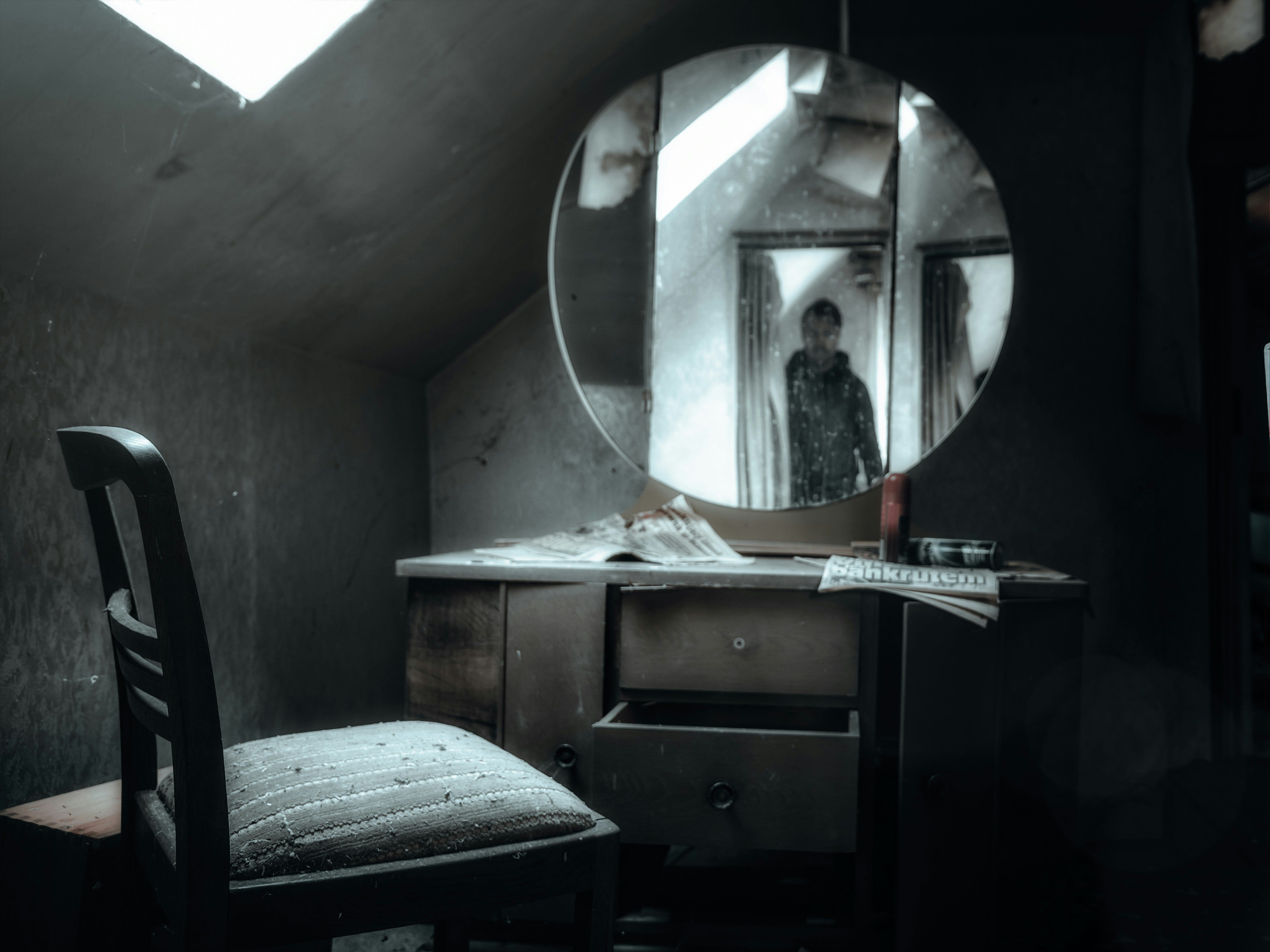
It was easy for Jude to ignore his reflection at first. The house doesn’t have many mirrors, and he’s decided to let his beard grow out. Ash always says she likes him a little unkempt.
But lately even a glimpse out of the corner of his eye as he steps out of the shower is enough to make his pulse pound under his skin. There is something wrong about the way his other-self moves; furtively, with hunched shoulders. It’s how Jude would draw someone who feels guilty or ashamed of something. It is a posture he recognizes.
He wants to take a closer look but staring directly into the mirror is impossible—his therapist has an intelligent explanation for this but it is only fear that stops him, a deep fear, a fear that burns like ice—so he’s taken to pacing in front of the living room window at night, watching the shadowy figure move. With the lamp on and the front lawn fully dark it is as if his other-self is floating, just barely keeping up with Jude’s increasingly frantic steps.
Tonight he is nearly running when Ash’s reflection moves into view, outline crisp and bold. Jude knows it is past three in the morning.
***
Jude does not know that Ash cannot sleep without his breath in the bed next to her. She normally lies awake patiently, listening to him walk, using the sound of his footsteps as proof of life until his body can be pressed against hers.
But tonight she feels his agitation like a second heartbeat, forcing her to her feet. Forcing her to find him scrambling back and forth in front of the window, back arched, the knobs of his spine grotesque in the dim light, knuckles nearly dragging across the floor.
In the seconds before he sees her, there is still time to turn around and pretend she never heard the wet, uneven sound of his ragged breathing, or saw the rabid blankness in his haggard expression. But her fear is back, holding her still. And when he looks up, Ash remembers an emaciated coyote she once saw in the ravine—how it tore into the bones of a rotten corpse, desperate to be fed.
The Jude in front of her is just as hungry.
***
He would never hurt her, and that is how he knows he is not alone in himself.
Jude’s intention is to approach her calmly. But his body nears hers too quickly, then his hands grab her arms too roughly, and he is speaking but he cannot hear the words, and he is just as afraid as she is. So he doesn’t struggle or cry out when Ash pulls her knee up hard between his legs, only lets himself fold over until his knees and bare chest meet the carpet, listening to her run to the bedroom and close the door. The click of the lock is the loudest sound he has ever heard.
Jude recognizes this violence and the fear it elicits. He watched it play out over and over throughout his childhood: a boy with a face so similar to Jude’s clawing at his own skin, small fists beating wildly against larger limbs, the senseless screams leaving a deep ringing in everyone’s ears. How their parents held themselves so tightly, nails biting into palms, anything not to strike back at their own child, anything not to curse him for existing.
The boy’s name was Simon. And Jude has realized who crawled out of death with him that day on the porch.
***
Ash does not see Jude’s brother in his reflection—she only sees the whites of his eyes and the contortion of his body. The air in the bedroom is thick with the smell of her fear as she shoves their chest of drawers in front of the door, mentally tallying the tools and weapons he has access to that she does not.
Ash is finally able to admit to herself that something changed in those 37 seconds when Jude’s heart was still. She cannot love him enough, fuck him hard enough, be patient enough, to get him back. Her thoughts move with calm clarity even as her body shakes, arms folded across her chest, shoulders curved inward.
She can feel him on the other side of the door. She can hear him laughing.
***
Happiness blooms inside Jude. He no longer avoids eye contact with the hall mirror; he leans into it, cheeks strained from smiling, the laughter he has been choking on finally bursting free. It was a closed casket funeral (that is what happens when you swallow your dad’s shotgun), so he hasn’t seen his brother’s face in nearly a decade. Simon didn’t come out of his room to say goodbye to Jude the day he moved out, the last time they spoke, and it feels like he is doing something similar now, hiding just out of reach.
Except this time Jude knows how to pull him free.
Down the stairs, through the laundry room, into the storage closet, behind the hot water tank, under the tile, he finds the box exactly where he left it. And inside, there is more than enough to take him where his younger brother is hiding.
Back in the living room, he pulls out his laptop and brings up the security footage again, rewinding to the moment his heart stops. He is nervous but knows this is the right thing. Sweat drips from his forehead onto the coffee table as he uses the TV remote to crush the pills, powder scattering, his mind a senseless whir. He barely remembers to send her the texts before leaning down, letting muscle memory take over as he inhales.
***
I’m sorry.
Don’t save me.
The words spur Ash into action before she can remind herself why she should be afraid. She shoves the dresser out of the way as quickly as she can, throwing the door open, running to the bathroom to grab the naloxone kit she swore she would never need again.
She sees everything at once when she steps into the living room: Jude unconscious on the floor, the crushed oxy spread across the table, that fucking video playing on his laptop. She cannot breathe, not until he does.
Ash kneels next to him, mirroring the figure on the screen. The cap pops off the vial with an audible snap, loud even amid the thuds of her heart, and his eyes fly open.
***
He knew she would come. But he overestimated his own ability to die. So now she is too early, and Jude is still living. He just needs a little more time, maybe 45 seconds will do it, enough for Simon to get a stronger hold.
Jude’s hand comes up to stop her wrist in midair. Relief flashes over her face before panic takes over—she tries to pull away but he cannot let her go, he just needs to help her understand.
***
He is preternaturally strong. Ash feels the bones in her wrist grind together as he moves, flipping them so she is beneath him, his other hand coming to her throat.
She knows that this time, Jude is going to kill her.
***
Ash’s fear pulses through Jude’s blood. But it is distant, and slow, as if already cooling in his veins. His fingers are stiff around her soft flesh, making it easy to dig in harder. He imagines he can feel the bruises blooming.
It is easier than he expected.
And he realizes that this is right, actually. Maybe even more right than ending his own life. Because surely she has loved ones who are looking for a space to crawl back into. And Simon can show them how.
An Interview with Victoria
Why did you write this piece? My stories usually come from one strong central image that gets stuck in my head. In this case, it was the concept of watching yourself die—initially through some sort of out-of-body experience, but it quickly became much more literal. I am also very inspired by the idea of mental illness and addiction as their own kind of haunting.
What are your hobbies? Do they ever play into your writing? I spend a lot of time working out, which is a great opportunity to work through my writing in my head without any other distractions.
What do you like about the horror genre? I love horror because it pushes a story’s themes. What if you loved someone so much, you had to kill them? What if your trauma was so entrenched into who you are, you don’t even recognize your own face in the mirror? As a writer, it makes you reach into the root of the character.
What are your favorite and least favorite parts of writing? The worst part of writing is always just before starting a new piece, when the ideas have been churning in my mind for so long that I've convinced myself the actual work will never live up to them. But my favourite part comes right after that: when the words start stacking up and the story takes itself somewhere I wasn't expecting.
Ghost Gnosh
By Axe Cornwell

in a trumpet manifestation
the dead gnaw on sound
the voice in the horn blast
demanding second helpings

when Victorian mediums beat cigar boxes on table legs
it swallowed the knocks like popcorn
in the 50s, it chewed the corners of klaxons from Chevrolets
now in the Reaganomic 80s, it gnoshes the stomach-rot of glitzpop radio
slurping cassette tape like licorice laces
trying to satisfy a gnawing, regretful
hunger for life
An Interview with Axe
Why did you write this piece? Growing up in rural Canada, I had a guitar amplifier that would pick up radio stations so that you would catch fragments of voices, and so read up on trumpet manifestations. I love the idea that as technology changes over time, spirits find new ways to haunt it.
Have you ever experienced anything paranormal? The vaults under Edinburgh, Scotland, are absolutely haunted and well worth a visit. 10/10
Axe’s Links
News
Current Submission Theme: Trees
(Submissions Open July 1-20, 2026)
We’re leaving this one up to your interpretation! Set your story in a forest, give us something that centers around a family tree, tell us about a haunted tree that becomes a haunted house, or write about dryads.
We’re even open for a meta version of the concept. Tell us a ghost story with a branching structure instead of taking the theme literally!