
Issue 1: Seattle
It's finally here! Read Emerald City Ghosts Issue 1 today!

Dear Readers,
I don’t live in Seattle, but there’s a little part of me that’s always belonged there, I think. I love that Dick’s Drive-In is the place to go if you want a burger after midnight. I love the crumbling staircases, wrapped in ivy, that descend from Queen Anne Hill. I love that there is at least one haunted house in the city. I know because my grandparents lived there, and the radiator always creaked, and I was never able to sleep.
This month, our submission theme was “Seattle,” and while not all of the stories take place in the city, there’s something of Seattle’s mystery to be found in each of them. “Compliance,” was the very first submission we accepted at ECG, and I’ve been excited to share it with you ever since. This month we also have a cosmic horror story, a poem that’s like a portal, and the winner of our 200 word story contest, as well as a haunting poem with a PNW vibe.
Thank you for joining us on this spooky exploration of a city we love!
Lo Corliss
Compliance
By M. A. Drake
Sarah Hartley, Field Officer
NOAA Division 8B | Columbia Basin Restoration Rollback
The Columbia runs past my boots with the steady indifference of federal policy. By Christmas, this water will hit concrete again.
I stand knee-deep in water that carved this channel before humans learned to remove dams, before we learned to build them again, watching the light fade over restoration beds that cost forty million dollars and seventeen years of lawsuits. Next month the concrete trucks arrive, and my report will explain why drowning salmon habitat represents sound fiscal management.
The bodycam on my shoulder blinks red, documenting my compliance with protocol. Water temperature forty-seven point three degrees, current slipping past like a cold hand smoothing gravel, dissolved oxygen adequate for creatures nobody cares about.
I record each measurement in my field notebook with the careful penmanship they insist on in the field after innumerable illegible reports, then again in the tablet, redundancy against legal chaos.
A call from my supervisor this morning, to remind me that we need to make sure the language won't trigger tribal litigation. We need the report to reflect that rollback won't negatively impact current environmental conditions. Clean documentation, he said. Bulletproof conclusions.
I wade deeper through water that tastes of snowmelt and alder tannins, following the restoration markers toward the spawning beds where coho returned last year in numbers that made hardened biologists weep.
Chest-deep now, the river presses its chill through neoprene and into my ribs. Every heartbeat feels borrowed. I tell myself to back out, but the water answers with another tug, as if it needs to show me what it's about to lose.
The world tilts without warning, gravel sliding under my boots, the sky flipping sideways, and an icy roar fills my ears, the sound of institutions collapsing.
I wake, kneeling in the shallows twenty yards downstream, water dripping from my hair and equipment, the taste of river bottom filling my mouth—sediment, minerals, something older, like drinking from the earth's memory.
My watch shows time has passed. Seven minutes missing, seven minutes of federal time unaccounted for, the kind of gap that generates questions I cannot answer without destroying what remains of my career.
The bodycam blinks steadily, still working, still recording, documenting whatever happened during my absence from consciousness. Uncaring of my drowning.
I should be hypothermic, should be calling for medical evacuation, should be following protocols for incident reports. Instead my lungs feel clearer than they have in years, almost cleansed, I have not breathed something this pure since I started living off office buildings’ recycled air.
My hands tremble, the current still pulls at my legs with that strange intentionality, and I shuffle back to shore wondering what kind of report I'll file today.
The motel's chemical fog clings to the ceiling like a low tide. It settles on the roof of my mouth—bleach and cheap citrus—only revealing itself when I step back into the hallway and taste plain air again.
I connect the bodycam to my laptop and watch myself take measurements with bureaucratic precision, dictating notes about gravel composition and water quality. The footage remains crisp until six forty-seven, when it dissolves into static that hisses through my headphones like dead television channels, seven minutes of white noise followed by an image of me kneeling in the water, staring directly into the lens with an expression that doesn't belong on my face.
Me, and not me.
The timestamp shows six fifty-four, but there's additional footage I don't remember filming, though the footage is suddenly underwater, the image remains impossibly clear.
There’s breathing off frame, rhythmic and calm, the sound makes my chest tighten with sympathetic drowning.
I delete the file, my chest still heavy. Certain evidence serves no one's interests.
My pulse steadies as the trash icon changes.
Another call, this one at dawn while I’m drinking gas station coffee that tastes like disappointment. “How’s the assessment going, Sarah?”
“A routine compliance check,” I tell him, a familiar script. “Water quality within normal thresholds, restoration infrastructure catalogued per directive.”
"Good. Let's keep the language clean on this one, neutral phrasing that confirms rollback implementation will cause no adverse ecological impacts. The tribes are already positioning for litigation, and we need this bulletproof."
I look at the screen, his voice keeps squawking from the speaker while coffee fog snakes across the dash. The steam inhales, exhales—calm and alive—while I mouth the lie he needs to hear, a rehearsal.
"Any irregularities in the restoration status?" he asks, and I think of seven missing minutes, of breathing water, of currents that pull like hands.
I hear myself say, "Nothing irregular."
"Excellent. Preliminary report by Friday. Keep it clean, Sarah."
After he hangs up I sit in the parking lot watching rain spot the windshield, thinking about the phrase that echoes in my mind, a prayer I'm not sure I believe. Nothing irregular.
Nothing irregular.
A lie told so often it starts to sound like the truth.
I once stood on a research deck and cried when the first coho returned to the Elwha. Who knows what’s left of me now.
I should be revising my draft, instead I return to the site against protocol, drawn by something I cannot name, some need to understand what I experienced before I document its irrelevance.
The restoration grounds look different in daylight, gravel beds extending upstream for nearly a mile, each stone positioned to create optimal flow conditions for salmon that return here by instinct older than human memory. Beautiful work, the kind that takes generations to perfect—scheduled now for drowning beneath concrete and steel.
I wade in slowly, alert for signs of disorientation, following the current until I'm standing above something that shouldn't exist—a fish trap constructed from carved bone and plant fiber, partially buried in sediment that predates any archaeological survey. Water flows around it in patterns that violate everything I learned about fluid dynamics, curling backward against the current as if the river itself is trying to avoid disturbing whatever lies beneath.
Sarah Hartley, someone says, my name spoken clearly from below.
I spin around but the riverbank is empty except for a great blue heron watching me from the far shore, motionless as driftwood. The backward-flowing water around the trap begins to emit a faint luminescence, and I step forward without deciding to, the river bottom dropping away beneath my feet as the water closes over my head with the gentleness of forgiveness.
Down. Drawn. Dragged. Drowning.
I should be drowning but my lungs work perfectly, drawing sustenance from the river itself, and the underwater world spreads before me in luminous revelation, light filtering through water beyond the physics I learned to trust.
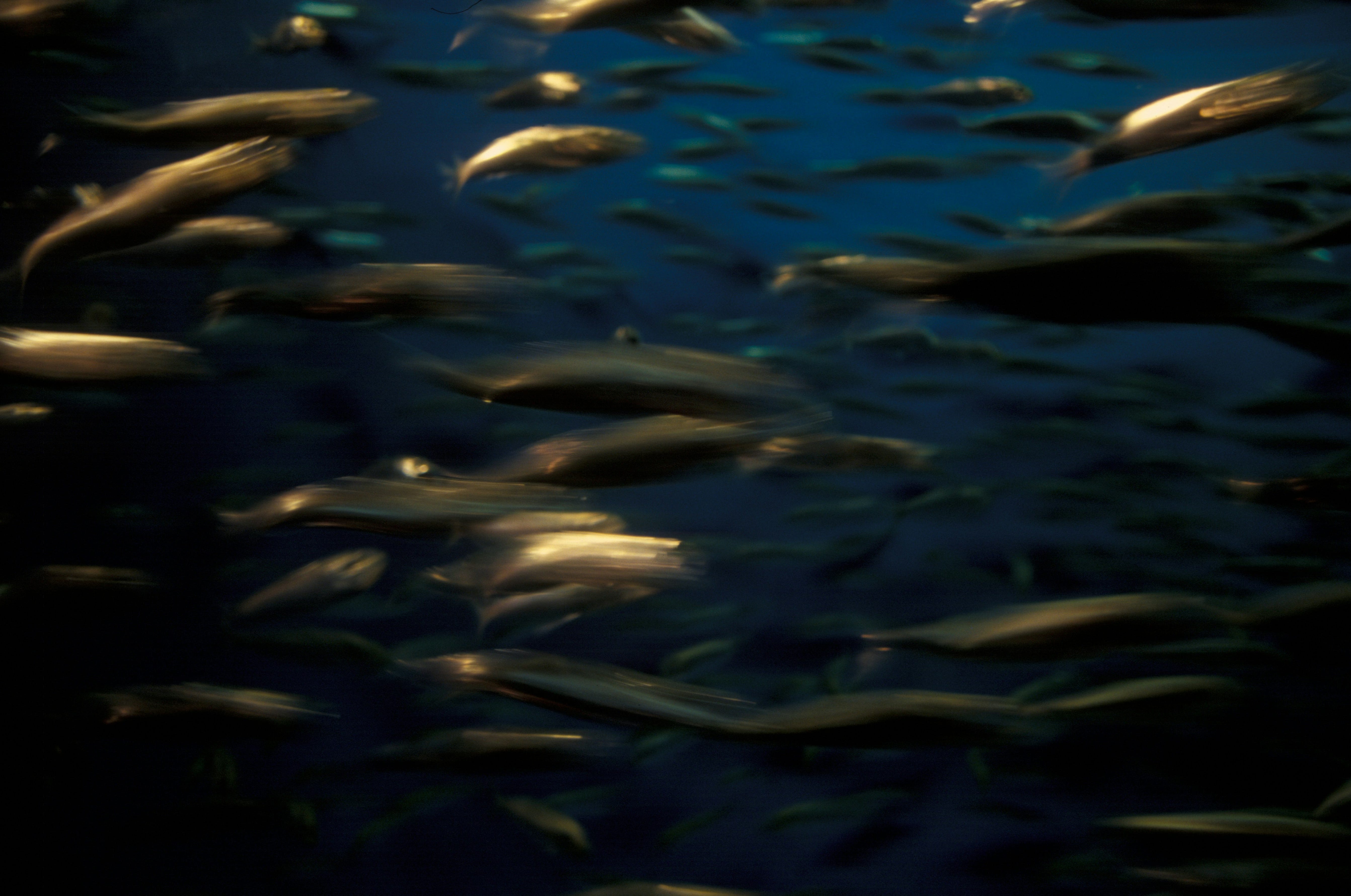
They move everywhere around me, salmon so thick the water becomes something molten and alive, their bodies flowing in coordinated patterns that speak of intelligence older than human language.
People stand among them, wearing the river like clothing, patient as deep currents, scales catching impossible light, hair flowing like kelp, skin shifting between human and something other.
They don't speak with words but I understand them completely
You knew.
And the knowledge flows through me like the water I'm breathing, carrying the weight of every compromise I've made in the name of advancement.
They're right with the terrible accuracy of natural law.
I knew. The data was unambiguous, the projections as reliable as gravity—remove the dams and salmon return in numbers that make biologists weep, build them again and populations collapse within a generation. Simple cause and effect in honest numbers.
But knowing and witnessing exist in different realms of moral responsibility.
Here, in this cathedral space where water meets conscience, seeing the ancient patience in their eyes, the understanding, the forgiveness and the deep deep sadness, feeling the accumulated weight of all the reports I've sanitized, all the meetings where I chose loyalty to the bottom line over truth—the smallness of my behaviour overwhelms me, drowning.
Not just complicity but the particular cowardice that comes with expertise, the dismissive betrayal of those who know better and do worse.
And you let it happen again,
It’s said without speaking, and one of them extends something toward me, a hook I know it’s carved from salmon bone, strung with red thread the color of spawning flesh.
Remember, it, she, they tell me.
Looking away is still a choice.
The water darkens at the edge of my vision. I'm drowning after all.
I wake on the riverbank, soaked and shivering, another hour lost to whatever happens when reality cracks open and collapses on itself.
A pointed weight shifting against my side tells me the salmon-bone hook is in my pocket, solid evidence—or maybe a witness. I need to look, to know. I can’t look and be certain.
I walk upstream following my own wet footprints, past a salmon carcass lying on the gravel, silver sides already dulling, but the eyes are wrong—human, and they follow me.
I look away.
The federal building's fluorescent hum burrows into my temples.
My cubicle waits exactly as I left it—regulation desk, regulation computer, regulation photograph of a regulation landscape that never existed. I open the compliance report template and watch words appear on the screen: "Assessment conducted September 15-16, 2025. Water quality parameters within acceptable ranges. No adverse ecological impacts anticipated from restoration rollback. Recommend proceeding with dam reconstruction as scheduled."
A rehearsed lie.
My cursor hovers over the send button, my hand finds the hook in my pocket. It pulses faintly under fluorescent lights, slightly damp despite being carved from dry bone. Remember.
It’s alien in my grip, and the most real thing in the world right now.
I delete the paragraph and type something new: "Additional monitoring protocols recommended prior to re-initiation of construction activities. Anomalous environmental conditions require further assessment."
Still not the truth, still not brave enough to write what I witnessed–and who would believe me anyway, but enough to delay, to buy time, to force someone else to make the choice I can't.
Looking away is still a choice.
A heavy splash echoes from the break-room sink—thick, like a salmon breaching wood. I can feel my socks cool, as if the carpet has learned to seep. No one lifts their heads. Keyboards keep tapping, a swarm of dry clicks above the hush of rising water.
You notice things when you start looking—a fish scale on the copier tray, wet footprints leading from the elevator, the persistent drip from the water cooler that sounds exactly like a salmon's tail slapping stone.
Sarah Hartley
My name rises from every glass of water in the building, eternal like the tide, and the cursor blinks and awaits my choice, while I tuck the salmon-bone hook back into my pocket, listening to the sound of something vast and patient waiting for me to–
An Interview with M.A. Drake
What inspired you to write this piece? "Compliance" emerged from my fascination with Pacific Northwest salmon people—a lesser-known but deeply significant form of shapeshifter lore that's intimately tied to specific landscapes and environmental justice. While researching for an article on shifters, I became captivated by how salmon people represent something different from typical transformation stories. They're not about individual power or escape, but about collective memory, environmental stewardship, and the consequences of ignoring natural law.
Why do you write? What do you believe horror inspires or exposes in us? Folklore and horror function as society's early warning system—ways to explore dangerous truths through the safety of "just a story." These genres have always been instrumental teaching tools. Women especially have used horror (from its inception as a genre) and paranormal fiction to examine typically feminine societal issues: body autonomy, agency, fear, transformation.
From Frankenstein's exploration of creation and monstrosity to modern true crime consumption as survival education, these genres provide acceptable space to explore liminal and extreme issues.
Whether I'm writing about salmon people fighting bureaucratic corruption or crafting epic fantasy worlds with complex magical systems, I'm always interested in how supernatural elements can illuminate very real human struggles and wisdom traditions.
M.A. Drake’s Links
Substack (maritime myths and legends, essays, and research)
Substack (dark fantasy and speculative fiction)
This Windy Morning
By Eric Robert Nolan
The gales cry,
their sounds rise,
so strangely like
the wailing of children.
The gales
have ripped a rift in purgatory.

Along the low hill's haze
and indistinct palette of grays,
the thinning slate shapes
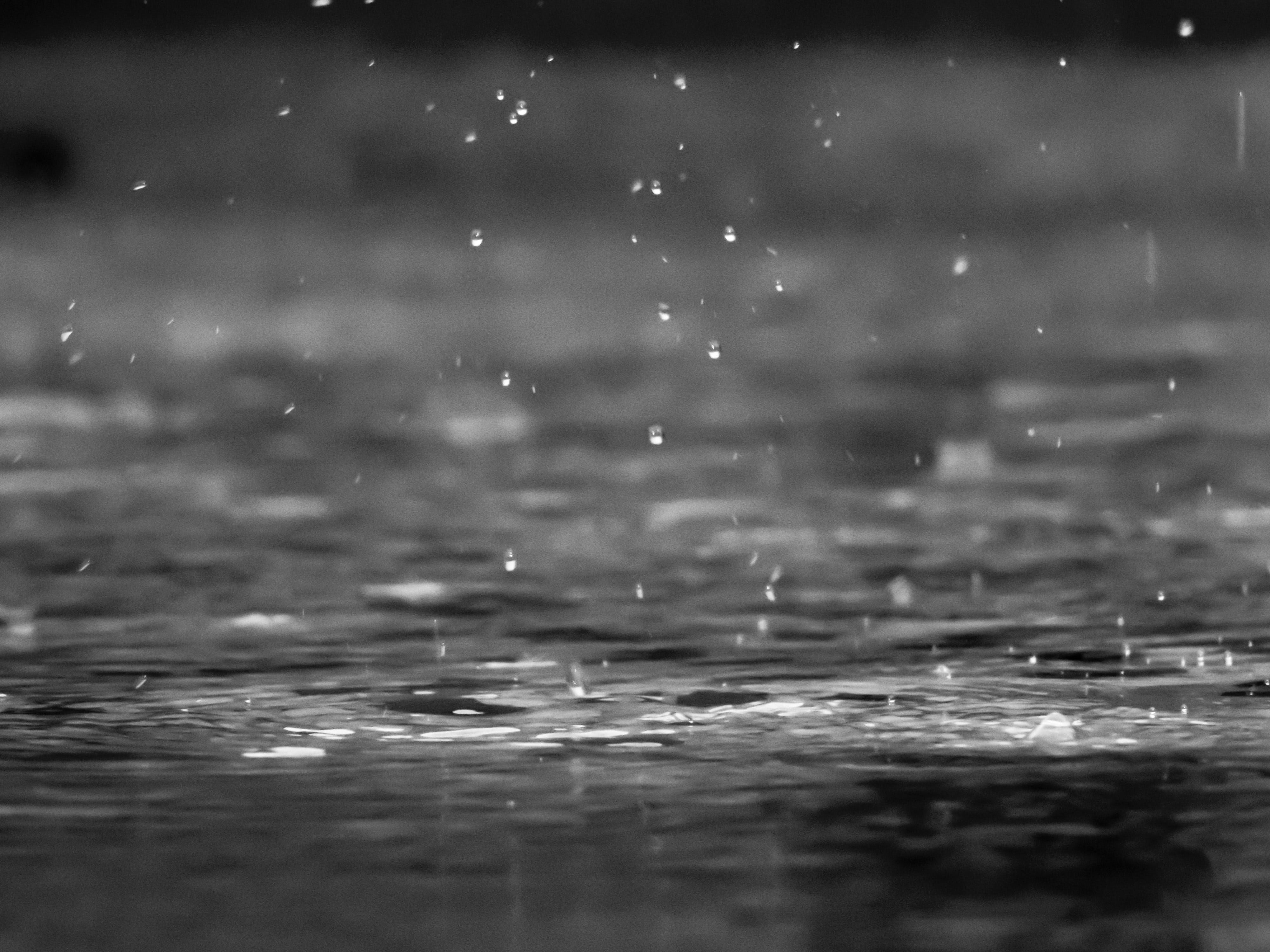
are either columns of rain,
or a quorum of waifish wraiths.

Condemned but inculpable
are those little figures:
long ago natives maybe, in an ironic,
insufficient sacrament --
this obscuring rain's
parody of baptism.

If that faultless chorus
should never see heaven,
they will ever be wind without end,
all of their lamentations
ever shrill within
arriving spring downpours.
Always will the squall
imprison their calls.

You and I should refrain
from any temptation to breach
these palisades of rain --
lest we be greeted by each
iron-colored countenance:
the sorrowing slim nickel
of an infant's visage,
little boys' graying faces,
the silvering eyes of the girls.
About Eric Robert Nolan
Eric Robert Nolan’s award-nominated writing has appeared throughout 60 periodicals in 11 countries across the Americas, Europe, Asia and Australia. These periodicals include Newsday (New York State’s third-largest newspaper and America’s 10th-largest), the Richmond Times-Dispatch (Virginia’s second-largest newspaper), The Roanoke Times (Virginia’s third-largest newspaper), The Free Lance-Star, The Daily Progress, the Eunoia Review, The Galway Review, Every Day Fiction and Quail Bell Magazine.
Eric’s writing and photography were also included in 22 anthologies in the United States, Britain and Ireland, as well as three chapbooks in Germany. (He was one of only eight poets worldwide selected for The Galway Review 12, the esteemed journal’s 2024 poetry anthology.) The Chinese Poetry Association thrice translated his work for the global readership of its Poetry Hall quarterly bilingual journal. Every Writer’s Resource named his poem “The Writer” as one of EWR’s Best of 2019.
Eric Robert Nolan’s Links
Blackwood Hollow: Children of the Blood Moon
By L.G. Wells
The chair is still there. Empty. It faces the hearth, rocking gently like it always did, but now it is only rocked by the breeze. I trace the rough-hewn stone of my wall, the cold familiar under my fingertips, and I see it, clear as the single shaft of light that marks the day. Just yesterday, or was it a dozen yesterdays, a hundred, Mother sat there, humming that old hymn about the harvest moon, her knitting needles a soft clack-clack against the silence.
Now, if I could ask Father, he’d furrow his brow, a polite pity in his eyes, and say, “Your mother, son? You’ve been dreaming again.” Or he’ll offer a kind, bewildered correction: “This chair? Why, that’s where your Aunt Elara always rested after her chores before she passed. A place to rest weary bones, but never… never your mother.” He’d lay a hand on my shoulder, his gaze earnest. “You remember Elara, don’t you? She cared for you, saw you into this world, after your true mother… well, she was lost to the fever, long before you were old enough to remember her face.”
But none of that can happen now, all I am left with are my memories.
And I haven’t been dreaming… The ache in my chest is as real as the splinter in my thumb, a constant, sharp reminder that she was here. She was. I saw her… I saw it take her.
To understand the impossibility of that truth, you need to understand the lies they built around us, brick by careful brick, for generations. It began weeks ago, when the first leaves turned that unnatural, blood-red hue. It began with the quiet hum beneath the silence of Blackwood Hollow, a hum that had been growing steadily since I was a child. A hum of faith. A hum of fear. A hum of the Old One, stirring beneath the very roots of this land. We all knew what happened when the hum grew restless, when the appeasement was not enough: the crops withered in the fields, the wells ran dry, and a sickness, more than just fever, would seep into the very bones of our livestock, then our children. Survival, Elder Silas always preached, depended on our unwavering devotion and our willingness to give the Old One its due.
Blackwood Hollow wasn’t merely isolated; it was a forgotten world. Tucked deep in a valley that the maps of the Outer Lands simply shaded green, a place where the sun seemed to set earlier and the stars burned brighter, untouched by the flickering lights of what they called “progress.” No wires stretched to our homes, no strange voices crackled from boxes. Our days were measured by the sun and the moon, our lives dictated by the rhythm of the soil and the unyielding tenets preached every Sunday by Elder Silas. He was a man with eyes like polished stones and a voice that could make the very air vibrate with conviction. We were the faithful, the keepers of the old ways, pure and unblemished by the clamor of the modern world. Or so we were taught.
My childhood was a tapestry woven with the scents of woodsmoke, damp earth, and Mother’s lavender sachets. She was the warmth in our small cottage, her laughter a quiet melody against Father’s stern, devoted silence. Father, a man whose hands were as calloused as old oak, loved her with a quiet reverence—the kind I knew was rarer than gold. They were the center of my world, a tight, unshakeable knot in the heart of the Hollow. And we, the three of us, bore no visible signs of the Mark.
The Mark of the Old One. It was whispered in hushed tones, a birthright or a burden, depending on who you were and the depth of your faith. A faint, purplish discoloration like a bruise that never healed, or a cluster of tiny, almost imperceptible moles forming a strange constellation on skin. This was the common understanding, murmured with a mix of reverence and fear.
But even then, something about it felt… wrong to me. Not a blessing, not a simple burden. Something deeper. More ancient. More consuming. The villagers, though, they just knew it was there. It wasn’t always obvious, but they’d look at the Widow Thorne’s mottled wrist, or the permanent “bruise” on young Thomas’s left hand, and nod, a shared recognition that the Mark of the Old One was present, and that was all they needed to know. I’d seen others with the Marks simply vanish as if they were never here, totally erased from the collective memories of the villagers.
But I knew. I missed them—the miller’s boy who taught me to carve whistles from willow branches, the old woman who’d sneak me ginger snaps when Mother said I could have no more. And because I remembered, because I knew the void they left, I clung fiercely to the belief that my own family was safe. My mother, with her clear, unblemished skin, protected from the sun by the long sleeves she was so adamant about wearing, and Father, whose hands were scarred only by honest labor, bore no such visible signs. And by extension, neither did I. This gave us a quiet distinction, a silent blessing, truly of the Hollow but not beholden in that same dreadful way. Never once did I imagine that our own perceived purity was the cruelest lie of all.
As autumn deepened, a different kind of preparation settled over the Hollow—one colder than the crisp air. The children were hushed, their games subdued. The older women gathered herbs with an almost frantic energy, hanging them to dry in every sunlit corner. There was a solemnity that built with each shortening day, a tension humming beneath the surface of their usual routines. The Feast of the Harvest Moon was ostensibly a celebration, but it carried an underlying current of dread, a collective holding of breath. I remember Mother, her movements a little quicker, her humming a little softer, as the crimson hue of the leaves outside began to mirror the rising of the Blood Moon—a rare and foreboding concurrence that few spoke of, but all felt. Even then, the unease was a distant thunder, a sound I attributed to the weight of tradition, not a storm which I did not yet realize would break over our house.
The day of the Solstice dawned with an unnatural stillness. No birds sang. The air itself felt heavy, vibrating with that subtle, ancient hum I’d grown up with, but now amplified, pressing in on my skull. The usual morning chores felt like a pantomime, everyone moving with a practiced, almost robotic grace. Father’s face, usually a canvas of weathered resolve, was strangely smooth, devoid of any discernible emotion as he prepared the lantern for the evening’s procession. Mother, too, seemed quieter than usual, her gaze distant as she packed a small basket with dried fruits and a loaf of fresh bread, the traditional offerings for the Feast. She caught my eye once, a fleeting, almost imperceptible tremor in her smile. A shiver, colder than the autumn air, traced a path down my spine.
Throughout the day, these glitches intensified. They were minor at first, easily dismissed. A tool in the shed would shimmer at the edge of my vision, its form briefly indistinct, before settling back into mundane reality. The faces of villagers, familiar since birth, sometimes seemed to slip, just for an instant, revealing a blankness beneath, or eyes that were too wide, too black, like polished obsidian. A word spoken by a neighbor would echo unnaturally, or my own footsteps on the path would sound wrong, too loud or strangely muted. It was as if the fabric of the Hollow, normally so tightly woven, was beginning to fray, pulled by an unseen, monstrous hand. I’d blink, shake my head, assure myself it wasn’t the onset of madness—perhaps just the lack of sleep, the solstice jitters, the heavy air. But a cold, knowing dread settled deeper into my stomach.
As dusk bled into the ominous twilight, the crimson glow on the horizon deepened. It was the Blood Moon, perfectly aligned with the Autumn Solstice, a conjunction Elder Silas had preached about for months, his voice resonating with an unnerving blend of reverence and warning. “A time of great giving,” he’d called it, “when the veil between our world and the true earth is thinnest.”
The entire village gathered at the base of the Great Stone, said to have been left for our people aeons ago as our connection to the Old One. The ancient monolith stood sentinel at the heart of the Hollow. Its rough surface, usually grey and unremarkable, shimmered with a faint, reddish sheen under the deepening sky. All the villagers, cloaked in their deepest celebration frocks—long, dark coats with hoods obscuring their features—formed concentric rings around the Elder, their faces impassive, their eyes fixed on the stone. Lanterns, carried by the men, cast dancing shadows that seemed to writhe and stretch like grasping fingers from within their ranks. In the lantern light, they were featureless shapes, unified in their purpose. To the Old One, we were all the same, here to fulfill its purpose.
My family stood near the front, a place of honor due to Father’s standing in the community. Mother clutched the offering basket, her knuckles white. I watched the Elder, his voice rising in a low, rhythmic chant, a guttural sound that didn’t feel like human speech, more like the grinding of ancient stones. As his voice deepened, the villagers around us joined in, a low, collective hum that vibrated through the very ground. The hum intensified, a thrumming deep in my bones, and I could feel the earth itself seemed to pulse beneath my feet.
Then, Elder Silas’s chant reached a crescendo, a final, drawn-out word that echoed through the valley. At that instant, a great rumble tore through the earth beneath us, a sound that shook the very air from my lungs. A violent gust of wind, like the breath of some colossal beast, extinguished every lantern in the circle, plunging us into absolute darkness. The world was pitch, a suffocating blackness that pressed in, and the only thing that let me know I was still alive was the intensifying rumble beneath my feet. The wind now howled around us, a multitude of crying wolves unseen, unheard by anyone but me.
In my terror, I reached out for Mother, but my hand found nothing but the cold, harsh air where she had stood moments before. “Mother!” I screamed, but there was no answer, only the roaring wind swallowing my cry.
All at once, the villagers fell to their knees. A sudden, invisible force pulled me down with them, a crushing weight on my shoulders that forced me onto the cold earth. They raised their arms to the heavens, their cloaked shapes indistinct against the faint glow now emanating from the monolith. I fought against the unseen pressure, but it was relentless. Slowly, against my will, my head was forced upward, my eyes locked on the glowing stone. A voice, ancient and vast, echoed in my mind, or perhaps it was the very air around me that spoke,“Behold,” it breathed. That’s when my terror was complete.
Atop the glowing stone—now an altar—she stood, her image fading in and out of focus…Mother. I cried out to her again, a desperate, raw sound torn from my throat, and tried to stand, but some demon force had removed all power from my limbs. All I could do was watch, as Mother reached out to me, her hand trembling, as she slowly pulled up the arm of her robe.
Her sleeve slid back, revealing not the unmarked skin I had always known, but a gnarled, deeply puckered scar on her wrist. It was an old wound, bearing the unmistakable signs of her own desperate hand, a raw, angry thing against her fading skin, twisting precisely where the faint, purplish discoloration of the Mark would have been. Her eyes, already losing their light, met mine across the impossible distance. They held a profound, heartbreaking sorrow, a desperate, silent plea, and a terrible, knowing truth that screamed louder than any voice: She had the Mark. She always had. And she had tried, futilely, to cut it away, to sever the unbreakable bond of the Old One. In that instant, the last remaining brick of my sanity crumbled.
The world shattered. The whispers I’d fought against for a lifetime swelled into a deafening chorus, not of human voices, but of a thousand screaming realities colliding within my skull. The faces of the villagers, now visible as a faint, pulsating crimson glow from their devotion to the monolith, stretched and contorted, their placid smiles replaced by cavernous, alien grins. I saw their true purpose, their true form, revealed in the terrifying, shifting light. My own memories began to dissolve at the edges, a fragile dam breaking against a tidal wave of borrowed, alien thoughts. The names of those lost—the names only I remembered—echoed in my mind, fighting against the truth I’d just witnessed, threatening to pull me under the communal tide of forgetting. I could feel the Old One, not just a hum now, but a vast, ancient intelligence, sifting through the remnants of my mind, searching for the threads of her existence, eager to consume them. It was a cosmic hunger, a devouring of truth itself. I was no longer just witnessing; I was part of the sacrifice… my mind the next offering.
And then, the images ceased to make sense, the logic of the world became fluid, the lines between what was and what was not, obliterated. I closed my eyes, but the crimson darkness behind my lids was filled with swirling patterns and the phantom scent of scorched earth and ancient rot filled my nostrils. My body convulsed, powerless, as the last thread of my sanity snapped.
When I opened my eyes again, perhaps minutes, perhaps days later, the air was still, heavy with the scent of damp earth and burnt offerings. The crimson glow was gone. The monolith stood cold and grey, as if nothing had ever happened. Around me, the villagers stood or moved about, their faces calm, their movements purposeful. No one looked at the empty space beside Father, no one, not even him, acknowledged the void where Mother had been. The Feast of theHarvest Moon had ended. The Old One had been appeased. And the Hollow, in its unwavering, terrible faith, had remade its reality.
My father found me later, slumped near the monolith, my hands clawing desperately at the dirt. He called my name, his voice kind, yet devoid of any recognition of the tragedy I had just witnessed, a stranger’s voice speaking familiar words. He led me back to our home, which now felt alien, her absence not just a void but a deliberate excision. The chair still rocked by the hearth. Empty.
They say I raged, then wept, then simply went quiet. They say I spoke in tongues never uttered, of a woman who never lived, of a scar that bore no mark. They say my mind broke from the burden of truth, and for the purity and peace of the Hollow, Elder Silas decreed I needed a place of quiet contemplation, away from distractions, until my spirit could be brought back into alignment with the communal truth.
So here I sit, surrounded by the cold, smooth stones that filter out the clamor of the world, and the hum of the Old One. This silent, windowless chamber in the oldest part of the village, once a root cellar, now my permanent dwelling. Each day, the light from the narrow slit high above the wall moves across the rough-hewn floor, marking the passage of time. Each day, the silence presses in, broken only by the scratching of my ragged fingernail on the stone, carving the memory of her name, her face, her scar, into the cold, unyielding rock. The walls are already covered, a frantic, desperate tapestry of truth. They believe I am mad, that I have forgotten. But I know. I remember. I will always remember.
As the crimson hue begins to creep across the sky tonight, I know the Blood Moon will rise again. It always does. And I will be here, remembering…
While they forget.
An Interview with L.G. Wells
What inspired you to write this piece? "Blackwood Hollow" was born from a creative spark ignited by a fellow author's writing prompt. The core themes of seclusion and fanatical religion have always fascinated me. I wanted to explore the unsettling dread that can fester in an isolated, puritanical community and unearth the horrifying consequences when foundational truths are deliberately forgotten or twisted. It’s a deep dive into how madness can take root and unravel the very fabric of reality.
Why do you write? What itch are you scratching? What do you like about the horror/paranormal/folklore genre? What do you believe horror inspires or exposes in us? For me, writing isn't just a choice; it's a fundamental need. I've always required some form of creative release, whether it's through my art, which is my day job, or music, which is a hobby. Writing sits perfectly in that space between profession and passion. To put it simply, I am always a happier and more complete person when I am creating something. It’s the itch of bringing an idea from a spark in my mind into a fully formed world, and writing is one of the most fulfilling ways to scratch it.
I’ve always been drawn to the dark. I genuinely love the feeling of being scared, and I enjoy crafting that experience for others. My favorite time of year is fall—the atmosphere of Halloween, the crisp air, the long shadows—and writing horror gives me a constant connection to that feeling all year round.
More than that, horror and the paranormal offer a distinct space to explore the human condition. These genres give us permission to delve into themes that might otherwise be considered strange, taboo, or forbidden. They allow us to confront our deepest fears—of the unknown, of death, of losing control—in a safe and controlled way. I believe horror doesn't just inspire fear; it exposes our resilience. It cracks open the door to the darker parts of our own nature and, in doing so, allows us to understand ourselves in a more honest and, surprisingly, positive way.
L.G. Wells’ Links
A Purple Shimmer, A Green Glow
By Alma Muminovic
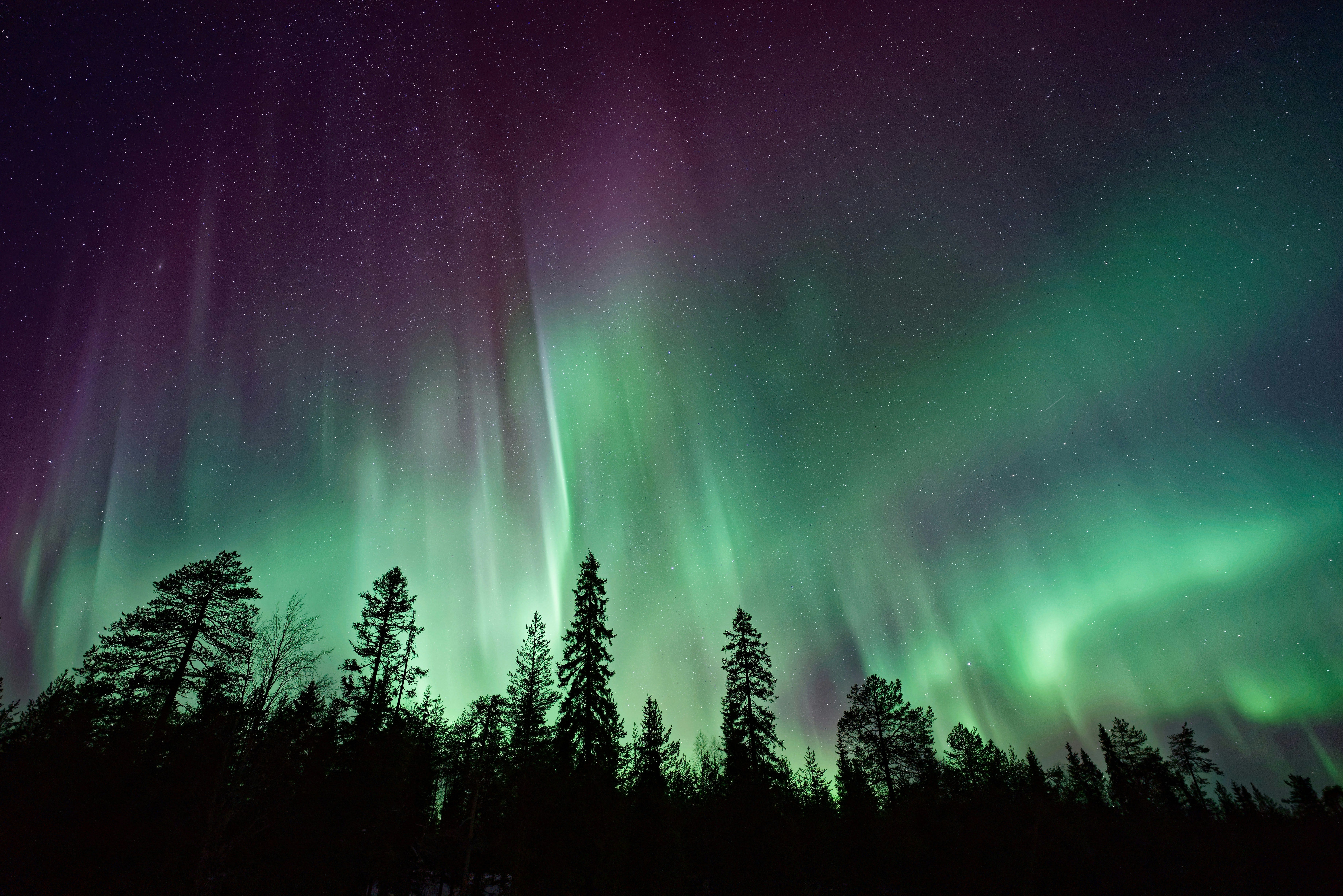
A purple shimmer. A green glow.
Light unfurled behind the door--
a world beyond, unknown. Behold!

I squinted through the glowing seam,
but saw no shape. Just light. Just gleam.
A ripple moved like water stirred--
a silent pulse, a whispered word.

What wonders waited past the veil?
What worlds asleep, what ancient trail?

A purple shimmer. A green glow.
I reached.
No pain. No burn. No dread.
Just silence pressing on my head.

I could not help but want to know.
I crossed the line. I let it go.

I emerged in a silver room,
all objects cast in lifeless gloom.
Statues sat--frozen, grim--
their faces warped, their gazes stilled.

A purple shimmer. A green glow.
A heavy hiss began to grow.

I shrieked in fright. My blood ran cold.
What terrors did this chamber hold?

A purple shimmer. A green glow.
From shadow slipped a creature bright--
scaled and silent, bathed in light.
Its tail, a shimmer, strange and bare--
and all around, a vacant stare.
An Interview with Alma Muminovic
Why do you write? What do you like about the horror genre? I’m exploring consciousness and human behavior. I like horror because its extreme circumstances a person can experience which reveals the true self.
What are your favorite parts of writing? I like the whole process. Usually I just go about my day and little pieces come to me a little at a time. Or I’ll wake up with a 2:00am urge to write something specific that needs to come out. It’s a release.
Tell us a few facts about yourself! I live in Texas, but I’m originally from Bosnia. I grew up in NJ, moved to Miami at 25 with my ferret Octavian (RIP), then Colorado, and now Texas. I’m a mother to two humans, two cats, and one pug.
Alma Muminovic’s Links
Ghostly Pergola
by Maryellen Brady

The full moon cast iron shadows through the pergola's ornate lattice as Satori Winters rested into the cold metal. Pioneer Square breathed around her. The distant hum of late-night traffic. The salt-tinged air drifted up from Elliott Bay.
Then the cable car bell chimed.
Satori's breath caught. The last streetcar had run these tracks in 1940. There it was again—a brass bell cutting through the night like a knife through silk. The pergola's glass panels began to glow with gaslight. Warm light that hadn't existed for decades.
A figure in a bowler hat tipped his cap to her from the stairs. "Evening, miss. Yesler line is almost here?"
She descended the stairs that materialized beneath her feet. Followed the phantom sound into an elaborate underground restroom that shouldn't exist. Terrazzo floors gleamed under flickering light. Marble stalls stood like sentinels. Expensive soaps and brass fixtures gleaming with spectral polish.
The city's pulse quickened beneath her feet. Seattle's industrial heart beat in 1909 time. Above, the living city of today, unaware that its buried past still drew breath in the moonlit corners where memory refused to die.
An Interview with Maryellen Brady
Have you ever seen a ghost? Yes. While I was in Scotland, I stayed at a castle near Rosslyn. Chatted with an old guy behind the front desk for an hour. Wanted to say thank you in the morning, and found out that not only was there no staff working after 7pm at the desk but when I described him, they showed me a photo and told me the man passed away about ten years before.
What are your favorite and least favorite parts of writing? World building is my favorite.
Dialogue challenges me.
Why do you write? Writing is like breathing for me. I do not know what would happen if I tried to stop.
Maryellen Brady’s Links
Thank you to our incredible contributors!
Thank you for reading Issue 1 of Emerald City Ghosts. Here are a few things to tide you over until next month:
If you missed last night’s launch party, you can still check out it out here and engage in the discussion!
Enter here to win a custom story!
We want your poetry related to Funerals and Graveyards!
Fantastic issue! Really enjoyed the salmon people twist!
A suggestion for the future: A clickable Table of Contents at the beginning of the Issue that would allow people to read a section at a time, instead of all at once, and easily find the next section without having to scroll through. You can do it by creating anchors and anchor links to your headers. You can even do it at the end of an issue to link to the next and previous issues so that people dont have to navigate to find them except through the issues themselves.
Great first issue though. Good job!